
A species of marine leech of the Piscicolidae family, Branchellion torpedinis is known to be an obligatory blood-feeding ectoparasite that mostly infests elasmobranchs, such as skates, sharks, and rays. This leech, which was first identified by Jules-César Savigny in 1822, uses its anterior and posterior suckers to cling to the skin, gills, or claspers of its hosts in order to feed on blood.
Classification of Branchellion
Kingdom :- Animalia (Multicellular eukaryotic organisms)
Phylum :- Annelida (Segmented worms with true coelom and metamerism)
Class :- Hirudinea (Annelids with fixed segments, without parapodia and with anterior and posterior suckers)
Order :- Rhynchobdellida or Agnathobdellia (Proboscis protrusible; jaws and setae absent.)
Genus :- Branchellion
Habit and habitat
Branchellion is a marine leech, found as parasite on torpedo
Distribution
The Atlantic Ocean is home to Branchellion torpedinis along the shores of Senegal, Europe, and the United States. The leech and another species of branchellion were observed feeding on a spotted eagle ray that a fisherman had caught close to Ocumare de la Costa in Venezuela in 1994. Additionally, it was gathered on the same species in the Caribbean that same year.
Comments of Branchellion
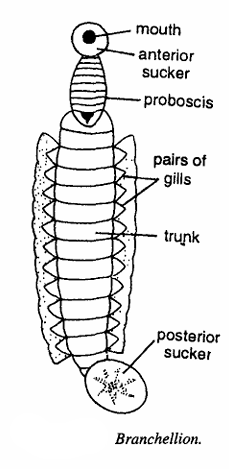
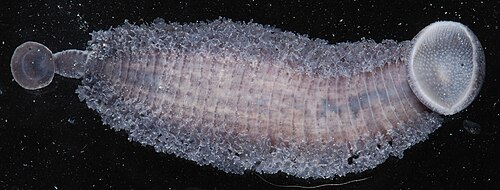
- Body is small elongated, cylindrical and measuring approximately 10 cm in length.
- Animal measures about 10 cm long.
- Body is differentiated into a narrow anterior region, the neck or thorax, and a wide posterior region, the trunk or abdomen.
- Abdomen contains 11 pairs of lateral, foliaceous outgrowths of the body which form gills.
- Gills are in the form of paired appendages.
- Anterior end is everted to form the proboscis.
- Suckers are prominent and pedunculate.
Identification
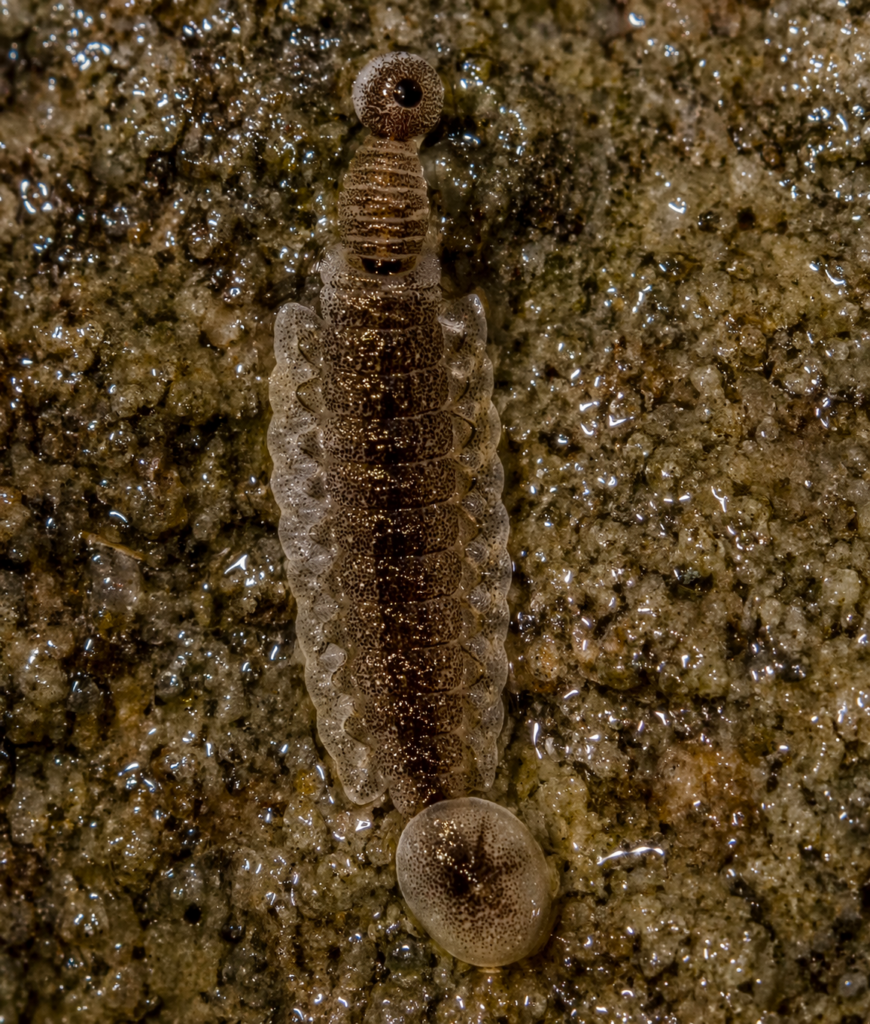
Since the animal contains 11 pairs of gills, hence it is Branchellion.
See other posts also
- DISSECTION OF RAT
- Top 10 Most Venomous Snakes in the World
- Wildlife Conservation : Importance | Threats | Conservation
- Nautilus: A Living Fossil of the Deep
- Platyhelminthes (Flatworms)
Discover more from Zoologyverse
Subscribe to get the latest posts sent to your email.