
Aeolis: Classification, Habitat, Anatomy, Identification, and More
Aeolis is a historically recognized genus of marine gastropod mollusks in the family Aeolidiidae, comprising species of aeolid nudibranchs noted for their striking, often translucent bodies adorned with vibrant cerata (dorsal appendages). Although taxonomic revision has shifted many species to other genera, “aeolids” remains a common reference for nudibranchs with these features. Aeolis species are celebrated for their unusual respiratory and defensive adaptations, as well as their ecological role as specialized predators on sea anemones and other cnidarians.
Classification of Aeolis
| Rank | Taxon | Distinctive Characteristic |
|---|---|---|
| Domain | Eukaryota | Cells with nucleus and organelles |
| Kingdom | Animalia | Multicellular, heterotrophic organisms |
| Phylum | Mollusca | Soft-bodied, unsegmented, often with reduced shell |
| Class | Gastropoda | Muscular foot; radula for feeding |
| Order | Nudibranchia | Shell-less in adult, diverse external appendages |
| Family | Aeolidiidae | Nudibranchs with finger-like cerata, nematocyst storage |
| Genus | Aeolis | Elongate, slender body with dorsal cerata |
Habit and Habitat
Aeolis nudibranchs inhabit shallow coastal waters, rocky reefs, and sandy substrates in temperate and subtropical marine environments. Most species are benthic, crawling on rocks, seaweed, and among seagrass beds. These organisms show a high degree of habitat specialization, preferring areas rich in sea anemones and hydroids—their main food sources. Aeolis are frequently spotted grazing on cnidarian colonies, using cryptic coloration and slow movement for camouflage. In some regions, they are found in large aggregations during breeding or feeding seasons.
Geographical Distribution
Members of Aeolis are recorded across the Atlantic, Mediterranean, and Indo-Pacific regions. Species such as Aeolis papillosa (now more commonly placed in other genera) are widespread from the British Isles and northern Europe to South Africa and Japan. Their habitat distribution reflects the global presence of cnidarian prey and suitable coastal substrates. Aeolid nudibranchs have also been documented from intertidal zones up to depths of about 40 meters.
General Characteristics of Aeolis
- Commonly called as sea slug measuring 5 cm.
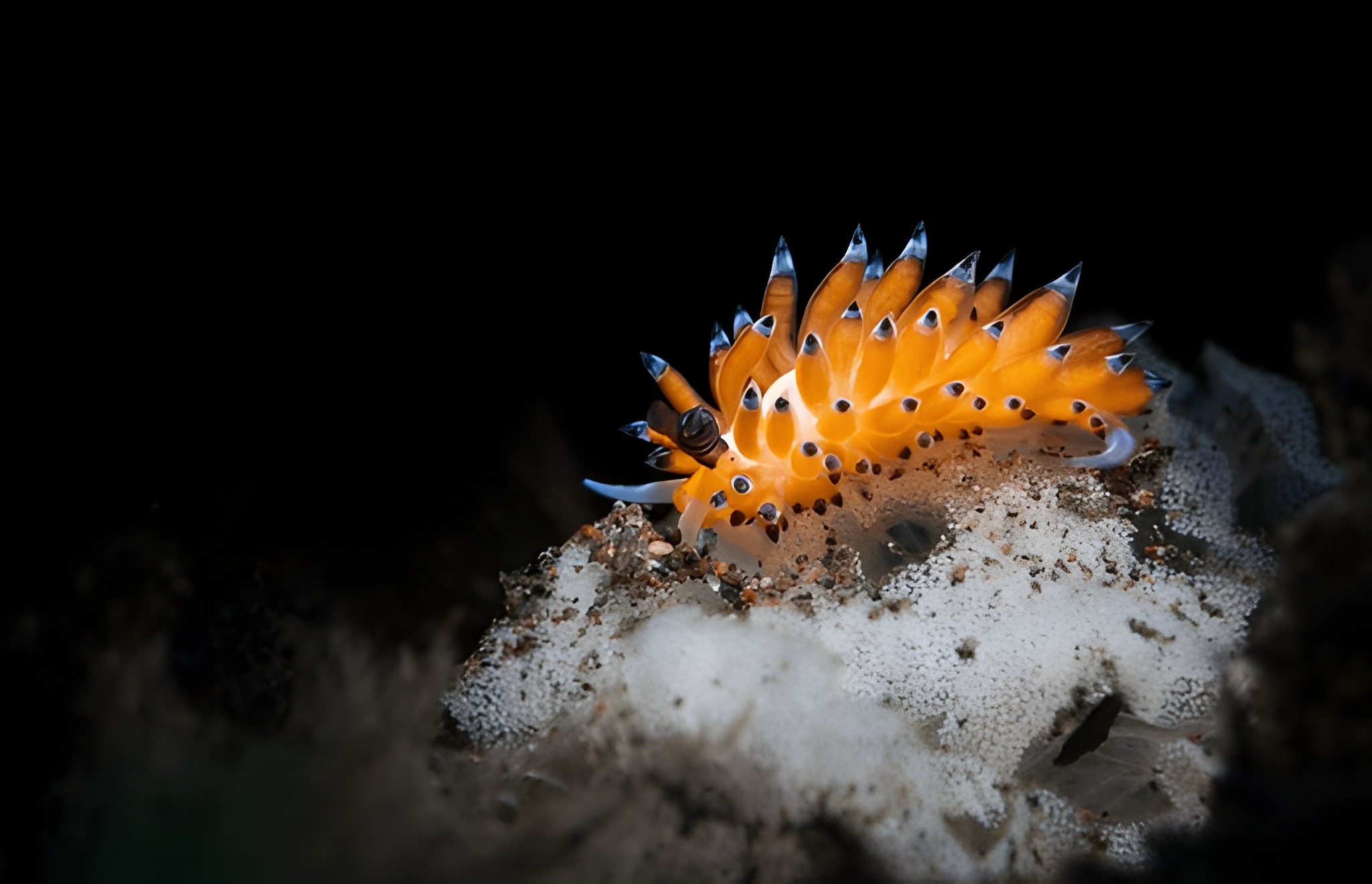
- Body is elongated, shell-less, broad, elongated, depressed, tapering behind, gray or orange coloured with brown or white spots.
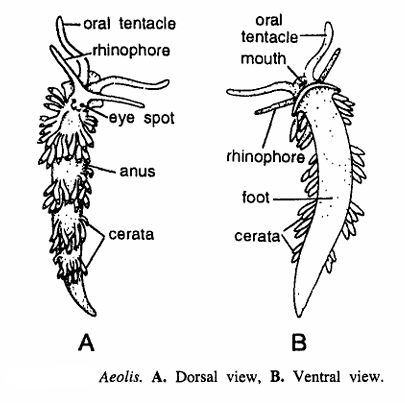
- Head comprises of 2 pairs of cylindrical non-retractile oral tentacles and a pair of sessile eye spot.
- The anterior pair of tentacles is called as cephalic tentacles, while posterior pair is designated as rhinophores.
- Anus is seen in mid dorsal position. True ctenidia are replaced by several secondary cylindrical branchiae or cerata, which are distributed over dorsal surface in 15 to 20 slanting rows.
- Dorsal surface has eyespots, anus and the ventral surface contains foot.
- Hermaphroditic protandrous form. It feeds on sea anemones, whose nematocysts are stored in the cerata and discharged on irritation.
- This is a unique example of an animal using in defence of the offensive organs of another.
- Body Shape: Slender, elongate body with a distinct head and tapering posterior end.
- Size: Ranges from a few millimeters to about 7 cm in length.
- Coloration: Translucent white to pink, often with orange or brown markings on cerata; colors may correspond to diet and microhabitat.
- Cerata: Numerous, finger-like dorsal extensions covering the back, used for respiration and nematocyst storage.
- Rhinophores: Two prominent, smooth or wrinkled sensory organs on the head, used to detect chemical cues.
- Mouth Parts: Equipped with a specialized radula for scraping and ingesting cnidarian tissue.
- Locomotion: Uses a muscular foot to glide smoothly over substrates.
Special Features
- Nematocyst Storage: Aeolis nudibranchs possess the remarkable ability to sequester stinging cells (nematocysts) from their cnidarian prey, storing them in specialized sacs within their cerata for use in defense—a unique adaptation among marine invertebrates.
- Chemical Defenses: Besides nematocysts, some Aeolis species produce deterrent mucous or secrete toxic compounds to repel predators.
- Respiration: Cerata greatly increase the surface area for gas exchange, compensating for the absence of typical gills.
- Hermaphroditism: All species are simultaneous hermaphrodites, engaging in mutual exchange of sperm and laying eggs in coiled ribbons or flat clusters.
Identification
Proper identification of Aeolis species requires careful examination of:
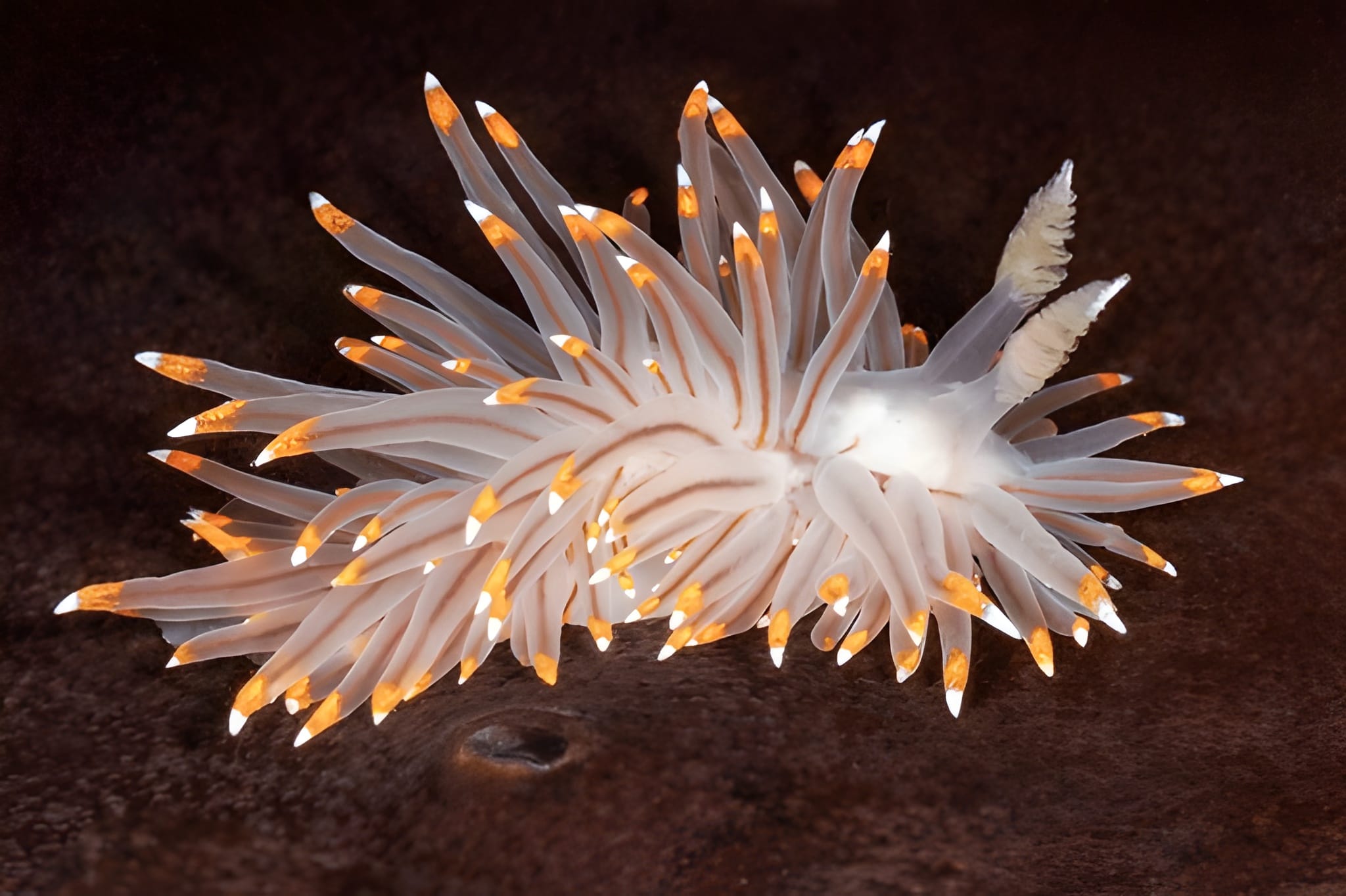
- Shape and arrangement of cerata: Dorsally placed, finger-like, often numerous; pattern and color may be species-specific.
- Coloration: Varies by locality, diet, and age; some species have distinctive orange, red, or blue markings.
- Rhinophores: Comparison of their shape, length, and texture to distinguish between genera.
- Size and habitat: Aeolis species tend to be smaller and more slender than other nudibranch genera.
- Feeding behavior: Preference for sea anemones and hydroids is a key ecological clue.
References
- World Register of Marine Species
- Nudibranchia—Aeolidacea—Sea Slug Forum
- Marine Biodiversity—Aeolid Nudibranch Guide
- British Marine Life—Aeolid Nudibranchs
- European Journal of Taxonomy: Revision of Aeolididae
Discover more from Zoologyverse
Subscribe to get the latest posts sent to your email.