
Pheronema
Pheronema is a genus of deep-sea glass sponges belonging to the class Hexactinellida. These sponges are typically found anchored in soft ocean sediments at great depths, where they filter tiny organic particles from the surrounding water for nutrition. Their bodies are supported by delicate, silica-based skeletal structures that give them a fragile, translucent appearance. Pheronema plays an important ecological role in deep-sea environments by contributing to nutrient cycling and providing microhabitats for small marine organisms.
Classification of Pheronema
- Phylum :- Porifera (Pore bearing, cellular grade, asymmetrical or radially symmetrical)
- Class :- HexactineIlida (Marine glass sponges with siliceous spicules of triaxon or six-pointed type)
- Order :- Amphidiscophora (Hexaster spicules absent; amphidiscs present and skeleton mainly of diactins)
- Family: Pheronematidae (Deep-sea glass sponges with long twisted root tufts anchoring them to the substrate)
- Genus :- Pheronema (Cup or bowl-shaped glass sponges with spicule tufts, attached by root spicules, and symbiotic association with polyps)
Habit and habitat
- It is found on the bottom of sea. It is the commonest hexactinellid amphidiscophore adapted for deep-sea life
Distribution of Pheronema
- It is found in U.K., U.S.A., and Europe.
General Characterstics of Pheronema
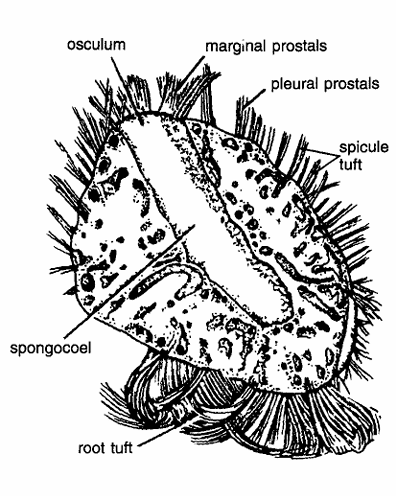
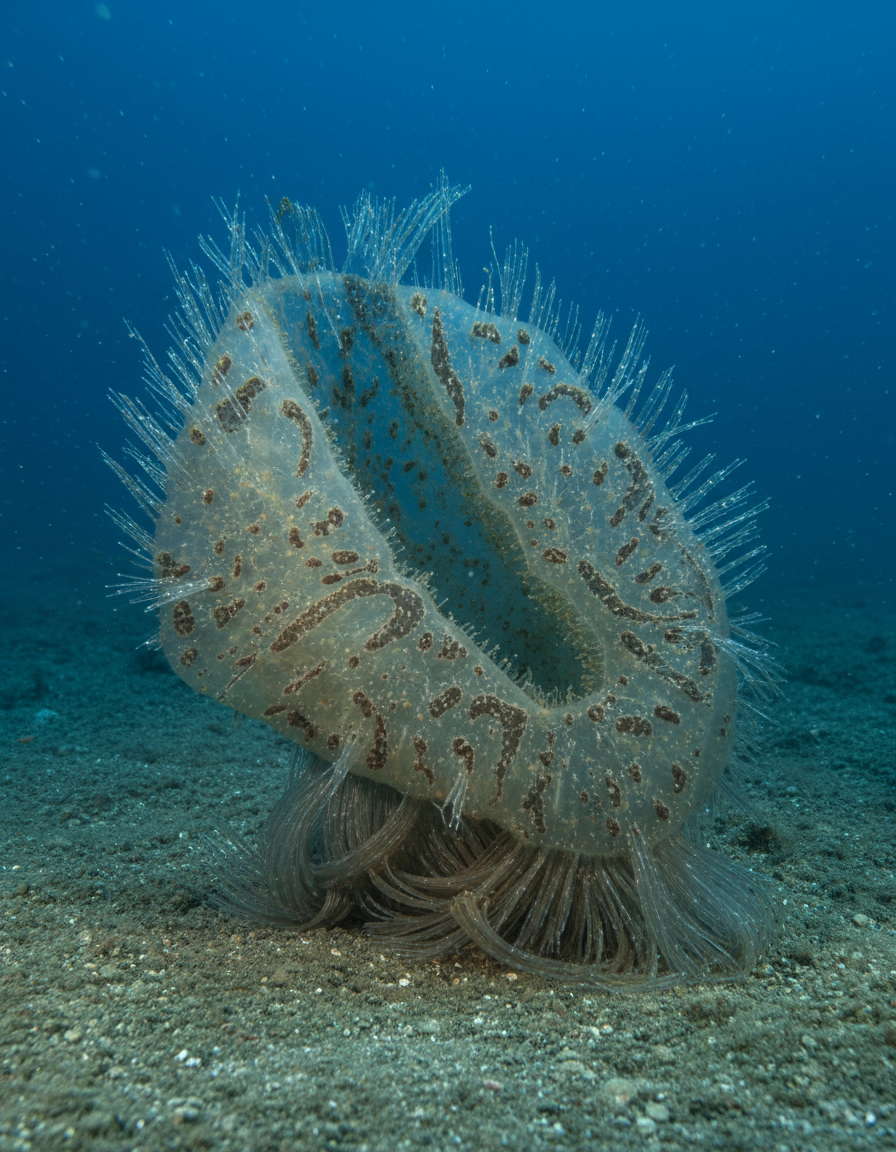
- Animal has a thick-walled cup or bowl-shaped body with the spongocoel opening above and with spicules in the form of tufts.
- Pleural tufts and long-twisted root tufts are present resembling glass wool.
- Projecting marginal and pleural prostals possess long monactines with small spines at one end, called as scepters.
- Spongocoel opens through the osculum which is encircled by upright spicules or marginal prostals.
- The animal in attached to the rocks by root spicules.
Identification
- Since the specimen contains spicular tufts such as marginal prostals and pleural prostals, hence it is Pheronema.
Discover more from Zoologyverse
Subscribe to get the latest posts sent to your email.