Zoologyverse

Classification of Cryptobranchus (Hell Bender)

CRYPTOBRANCHUS (HELL BENDER)

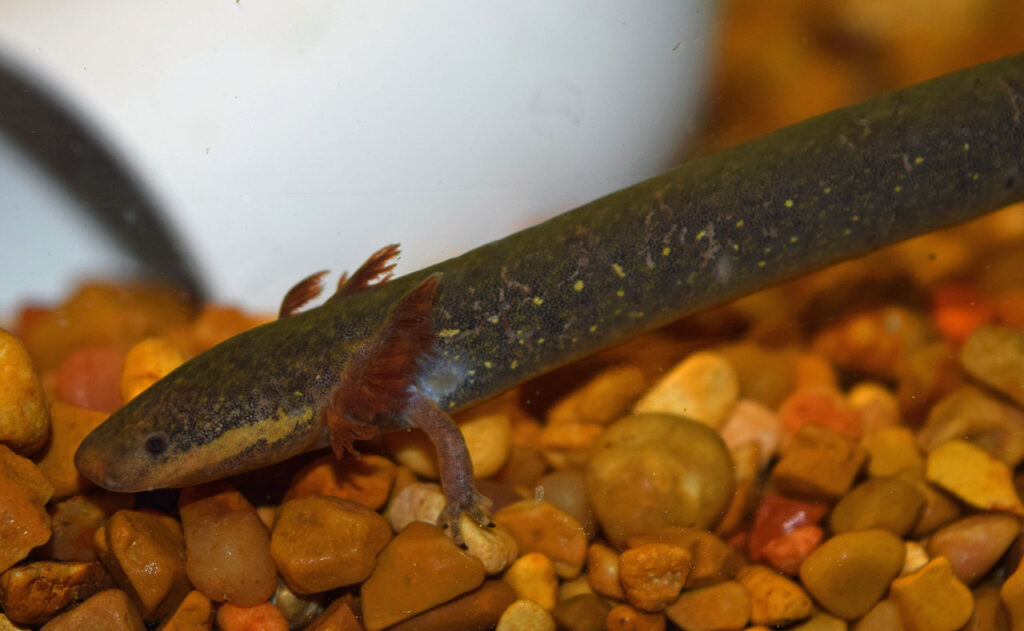
The genus Cryptobranchus, which includes the hellbender salamander (Cryptobranchus alleganiensis), is an aquatic amphibian native to the freshwater streams and rivers of North America. Its ecological importance is significant due to its role in aquatic ecosystems, its sensitivity to environmental changes, and its contribution to biodiversity. Classification of Cryptobranchus (Hell Bender) Geographical distribution Habit and […]

CRYPTOBRANCHUS (HELL BENDER) Read More »

Classification of Proteus (Olm)

PROTEUS (OLM)

The Proteus, or olm (Proteus anguinus), is an aquatic salamander endemic to the caves of Southeastern Europe, particularly the Dinaric Alps. Its ecological importance stems from its role in maintaining the balance and health of the unique and fragile subterranean ecosystems it inhabits. Classification of Proteus (Olm) Geographical distribution Habit and habitat General Characteristics of

PROTEUS (OLM) Read More »

Classification of Necturus (Mud Puppy)

NECTURUS (MUD PUPPY)

Necturus, commonly known as mudpuppies or waterdogs, are fully aquatic salamanders found in freshwater ecosystems of North America. These amphibians play an important role in the ecology of the aquatic environments they inhabit. Classification of Necturus (Mud Puppy) Geographical distribution Habit and habitat General Characteristics of Necturus Ecological Importance of Necturus 1. Trophic Role in

NECTURUS (MUD PUPPY) Read More »

Classification of Uraeotyphlus

URAEOTYPHLUS

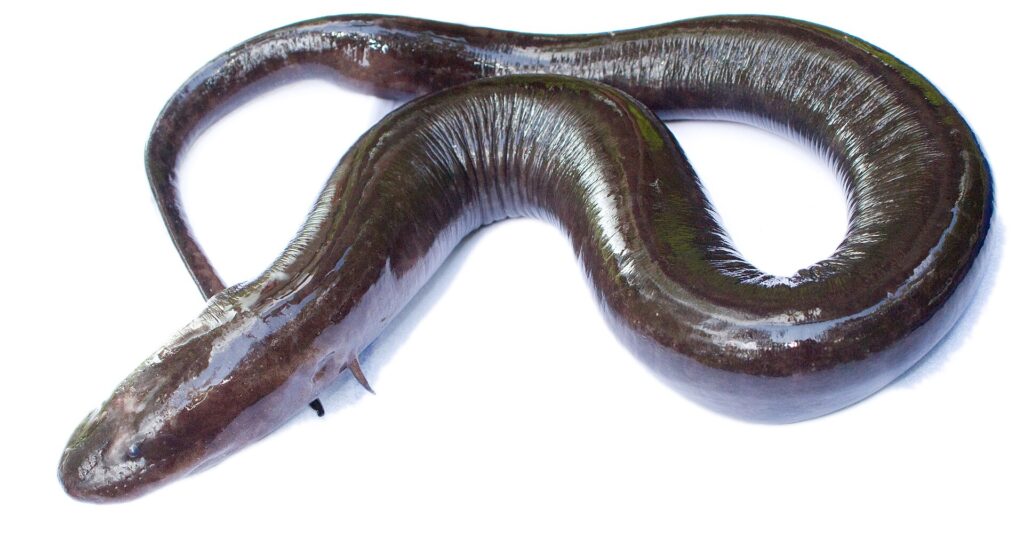
Uraeotyphlus play a vital role in aerating soil as they burrow, contributing to soil health and fertility. They act as both predators (feeding on invertebrates like earthworms and termites) and prey (for larger animals), maintaining ecological balance. Classification of Uraeotyphlus Geographical distribution Habit and habitat General Characteristics of Uraeotyphlus Conservation Status of Uraeotyphlus Special features

URAEOTYPHLUS Read More »

Classification of Ichthyophis

Ichthyophis

Ichthyophis resembles Amphibia in having a 3 chambered heart, conus arteriosus, urinogenital organs and brain like Amphibia. But it differs from living Amphibia in having scales in dermis and meroblastic eggs. Classification of Ichthyophis Geographical distribution Ichthyophis is distributed in tropical regions and found in Sri Lanka, Philippines, Borneo, Java, Scychelles, Mexico to Argentina and

Ichthyophis Read More »

Classification of Trygon (Dasyatis)

TRYGON (DASYATIS) STING RAY

Trygon Commonly known as stingrays, holds significant economic importance in various sectors, including fisheries, ecotourism, and research. Classification of Trygon (Dasyatis) Geographical distribution Trygon is abundantly distributed in tropical regions of the Atlantic and Pacific Oceans. It has been reported from India, Japan, China, North America, Australia and South America. Upper Jurrassic to Recent. Habit

TRYGON (DASYATIS) STING RAY Read More »

RHINOBATUS (GUITAR FISH)

RHINOBATUS (GUITAR FISH)

Rhinobatus (family Rhinobatidae) are a group of cartilaginous fish with significant economic and ecological importance. Their value comes from their use in fisheries, trade, and their role in marine ecosystems. Classification of Rhinobatus (Guitar Fish) Geographical distribution Rhinobatus has been reported from west coast of Africa, Indian Ocean, Australia, China, Atlantic and Pacific coasts of

RHINOBATUS (GUITAR FISH) Read More »

Classification of Pristis (Saw Fish)

PRISTIS (SAW FISH)

The Pristis fish, commonly known as the sawfish, has significant economic and ecological importance, primarily in fisheries, tourism, and as a part of the marine ecosystem. Here’s an overview: Classification of Pristis (Saw Fish) Geographical distribution Pristis is found in tropical and sub-tropical regions. Indian form ascends beyond tidal zones. It is reported from America,

PRISTIS (SAW FISH) Read More »

Classification of Cephalodiscus

CEPHALODISCUS

Cephalodiscus is a small genus of sessile hemichordates belonging to the class Pterobranchia. These colonial, tube-dwelling marine organisms are known for their unique lifestyle, in which individuals live within secreted tubular structures attached to rocky or deep-sea substrates. Each zooid possesses a set of feathery arms used for filter feeding. Although they are relatively simple

CEPHALODISCUS Read More »

Classification of Rhabdopleura

RHABDOPLEURA

Rhabdopleura belongs to the class Pterobranchia and represents one of the simplest living hemichordates. It lives in colonies on hard marine substrates and secretes delicate tubes, called coenecia, in which individual zooids reside. Each zooid extends its tentaculated arms to filter feed, capturing suspended particles from the surrounding water. Because it shares important features with

RHABDOPLEURA Read More »

Classification of Saccoglossus

SACCOGLOSSUS

Acorn worms in the genus Saccoglossus are members of the class Enteropneusta within the phylum Hemichordata. These worms feed on organic particles while burrowing through muddy or sandy soils in shallow sea environments. They are crucial to the recycling of nutrients and the turnover of sediment. Saccoglossus offers important information on early deuterostome evolution and

SACCOGLOSSUS Read More »

BONES OF VERTEBRAL COLUMN

BONES OF VERTEBRAL COLUMN

Comparative study of Vertebral Column Comparative studies of the Vertebral Column have shown that although the basic structural patterns (cervical, thoracic, lumbar, sacral, caudal) are conserved among vertebrates, regional specialization reflects locomotion, posture, and adaptation to environmental demands.Vertebrae mark an evolutionary transition from simple, rigid structures in fishes to complex, intertwined, curved columns in tetrapods. Scoliodon : Vertebral Column Comments : In Scoliodon Vertebral Column of 130 vertebrae divided into trunk and caudal regions.

BONES OF VERTEBRAL COLUMN Read More »

PELVIC GIRDLES IN VERTEBRATES

PELVIC GIRDLES IN VERTEBRATES

Comparative study of Pelvic Girdles of vertebrate The vertebrate pelvic girdles is a robust paired structure (ossa innominata) consisting of the ilium, ischium, and pubic bone that connects the hind limbs to the axial skeleton for locomotion and support. It has evolved from the simple cartilage structure of fish to the robust fusion structure of quadrupeds that supports body weight, making it highly adaptable to bipedal locomotion, jumping, and walking

PELVIC GIRDLES IN VERTEBRATES Read More »

FORELIMB BONES OF VERTEBRATES

FORELIMB BONES OF VERTEBRATES

Comparative study of Forelimb bones of vertebrate The forelimb bones of vertebrates have homologous structures (humerus, radius, ulna, carpals, metacarpals, phalanges) adapted to different functions such as flight, running, swimming or grasping, derived from a common ancestor. Although the basic structure is pentadactyl (five fingers), evolution has modified, fused, or reduced these bones to meet

FORELIMB BONES OF VERTEBRATES Read More »

Comparative study of Hind limb bones of vertebrate

HIND LIMB BONES

Comparative study of Hind limb bones of vertebrate The hind limb of vertebrates have a homologous five-toed plan – femur, tibia/fibula, tarsus, metatarsals and phalanges – adapted to specific modes of locomotion. Structural variations exist: running mammals (horses) have reduced toes (cannon bones) to increase speed, birds have a fused tibia, while tetrapods like salamanders

HIND LIMB BONES Read More »

FISH SLIDES (SCOLIODON)

FISH SLIDES (SCOLIODON)

Fish slides of Scoliodon are widely used in zoology laboratories to study the internal and external anatomy of the spiny dogfish shark. These slides typically display structures such as the gills, fins, vertebrae, muscle blocks, and sensory organs. Students examine Scoliodon slides to understand cartilaginous fish morphology, respiratory adaptations, and evolutionary features that distinguish elasmobranchs

FISH SLIDES (SCOLIODON) Read More »