
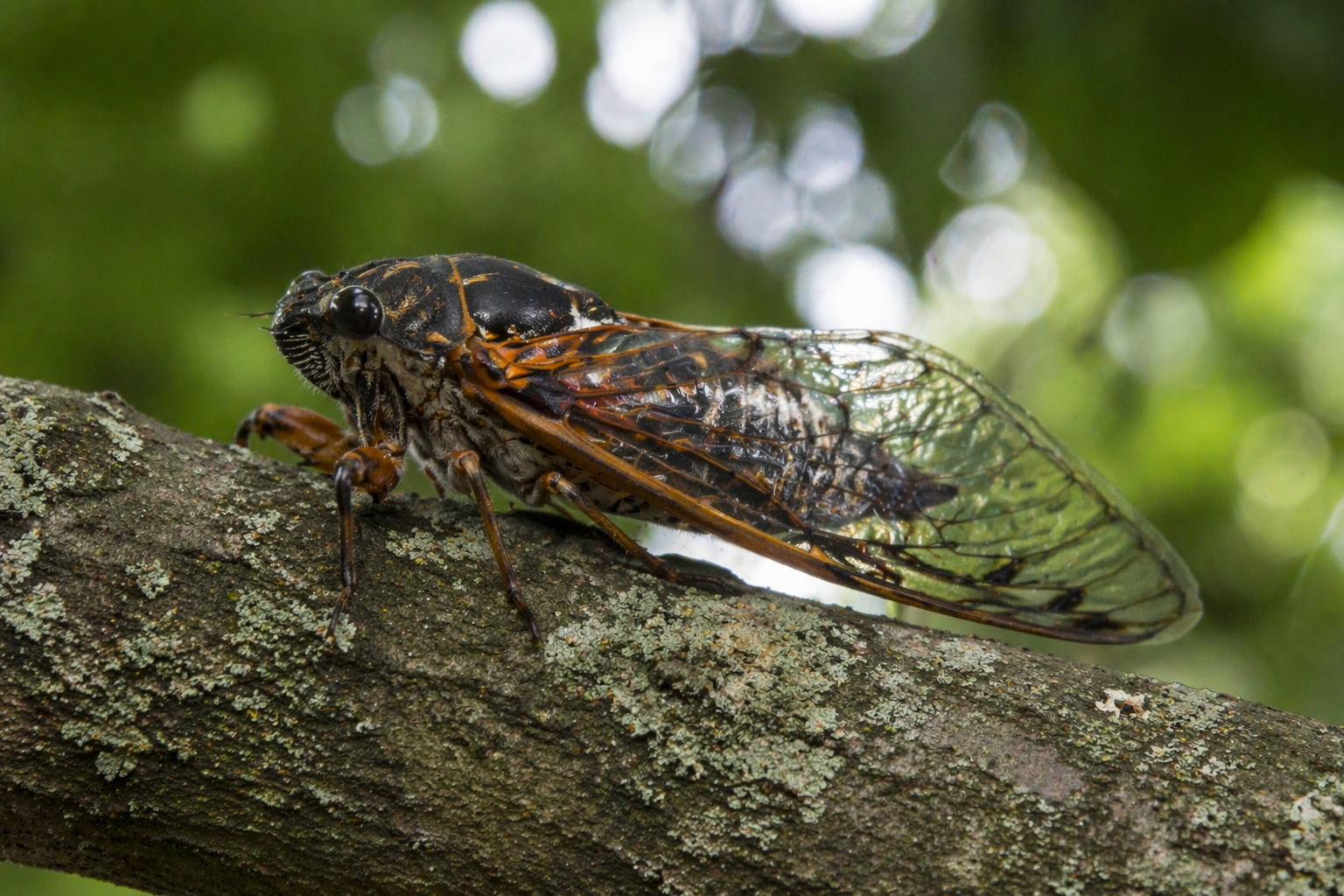
Cicada have membranous front wings, short antennae, and prominent eyes spaced widely apart. In most species, their drum-like tymbals quickly buckle and unbuckle to generate an incredibly loud song. Current species of Cicadomorpha can be found worldwide in moderate to tropical regions; the earliest known fossils date back to the Upper Permian. Usually found in trees, they lay their eggs in a bark slit and consume the watery sap from xylem tissue. The majority of cicadas are mysterious. While some species call at dawn or dusk, the great majority of species are active during the day as adults. There are very few creatures that are known to be nocturnal.
Classification of Cicada
Phylum – Arthropoda (Jointed Appendages)
Class – Insecta (3 pairs of legs.)
Sub-class – Pterygota (Winged insects.)
Division – Exopterygota (Wings develop externally.)
Order – Hemiptera (Metamorphosis gradual.)
Habit and habitat
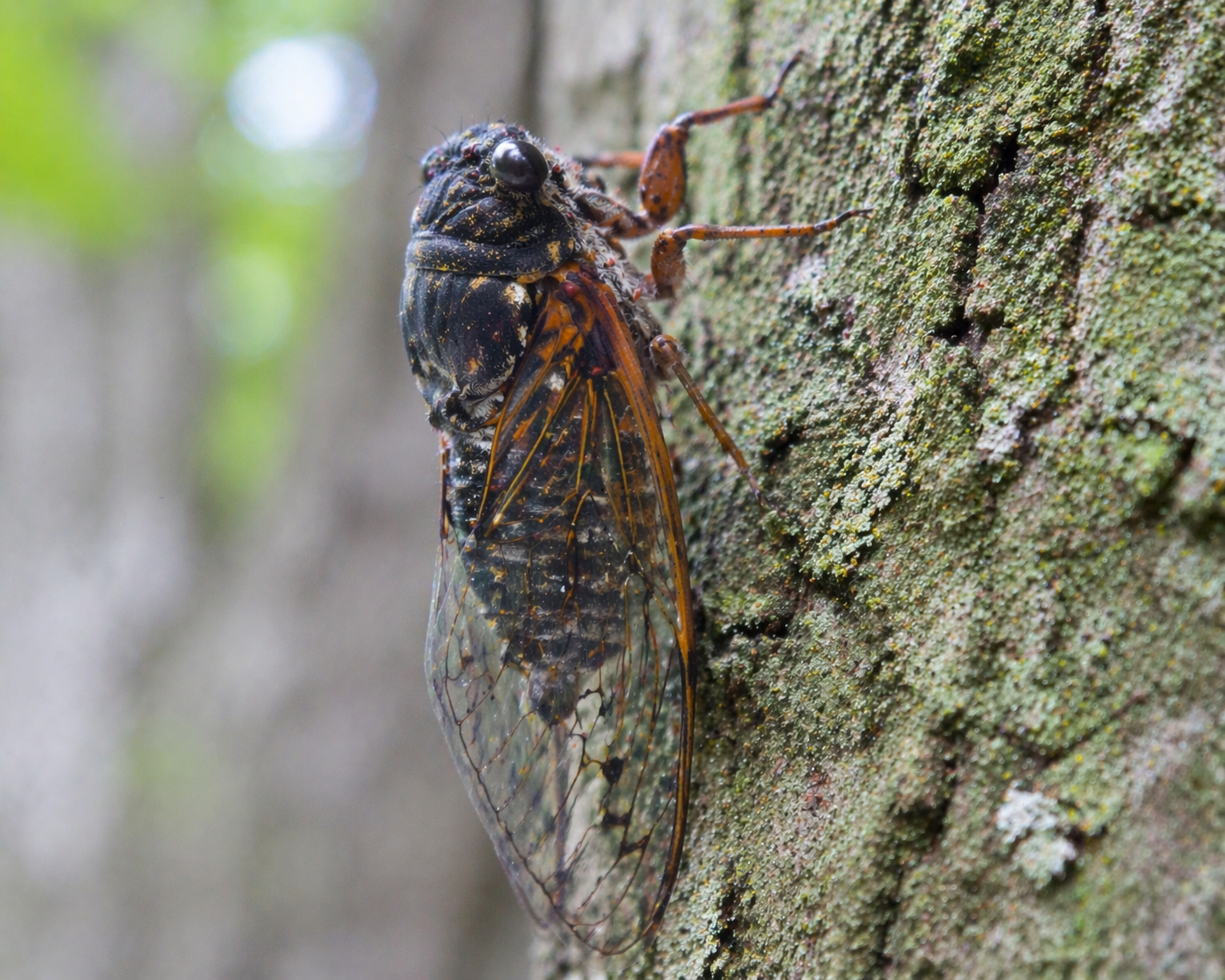
Cicadas are dependent upon trees for food and occur most abundantly in forests and well wooded moist localities
Distribution
It is found in tropical, sub-tropical and temperate forests. It is specially found in India, Europe and America.
Comments on Cicada
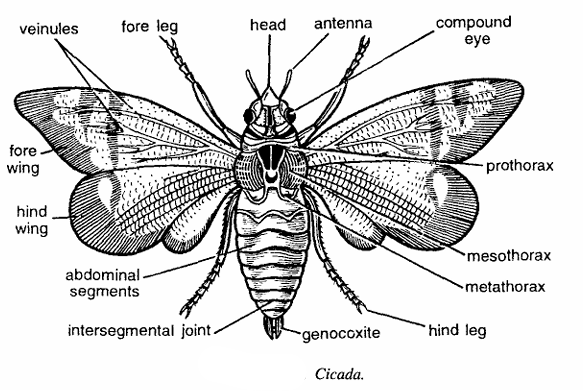
- Cicada is a large insect with entirely membranous wings and 3 sub-contiguous ocelli and measuring one to several inches.
- Body is divided into head, thorax and abdomen all well developed.
- Head is broad, having 2 lateral well developed compound eyes and 2 short antennae.
- Thorax is composed of prothorax, mesothorax and metathorax.
- Wings are large, often coloured and lie at an angle over the abdomen.
- Abdomen is elongated and 10 segmented and is broadly jointed to thorax.
- Sound production and breeding habits are peculiar.
- Sound is produced by the male only, which has a drum-like apparatus, called as aedeagus.
- Cicada is capable of producing loud, shrill, vibrating sound, supposed to be sexual call.
- The sound can be compared to knife-grinder or even a railway whistle.
- Life cycle is completed in 2 to 17 years.
- Nymph burrows in soil, feeds on plants and emerges adult after 2 to 17 years and hence it is often called as ‘seventeen-year locust’.
Economic status
The ovipositing females may cause serious damage to the twigs and branches of fruit and hardwood trees.
Identification
Since the insect has membranous wings and all above features, hence it is Cicada.
See other posts also
- DragonFly
- Ephimera (Mayfly)
- Schistocerca (Locust)
- Melanoplus (Grasshopper)
- Periplaneta americana (Cockroach)
Discover more from Zoologyverse
Subscribe to get the latest posts sent to your email.