
Clepsine (Glossiphonia) is a genus of freshwater leeches in the phylum Annelida, class Hirudinea, suborder Rhynchobdellida, and family Glossiphoniidae.It is a small to medium-sized, dorsoventrally flattened species that was described by James Rawlins Johnson in 1816. It has a broad, elongate-ovate body with 70 annuli, six rows of dorsal papillae, a mouth that bears a proboscis, and three pairs of eyes arranged in parallel rows.The blood or hemolymph of ectoparasitic hosts, including snails, amphibians, turtles, and aquatic oligochaetes, is the main food source for these ovoviviparous leeches, which nest their young on the ventral surface. Occasionally, they also serve as blood parasite vectors.
Classification of Clepsine (Glossiphonia)
Kingdom :- Animalia (Multicellular eukaryotic organisms)
Phylum :- Annelida (Segmented worms with true coelom and metamerism)
Class :- Hirudinea (Annelids with fixed segments, without parapodia and with anterior and posterior suckers)
Order :- Rhynchobdellida or Agnathobdellia (Proboscis protrusible; jaws and setae absent.)
Genus :- Clepsine (Glossiphonia)
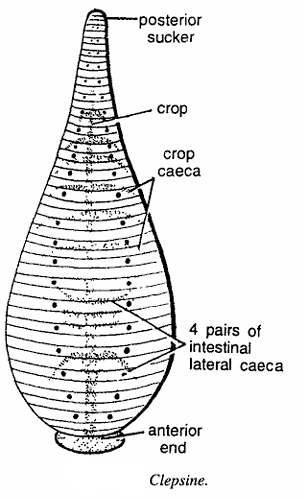
Habit and habitat
Clepsine is a fresh-water leech. It feeds on snails, larval stages of Chironomus and Hydrophillus.
Distribution
It has cosmopolitan distribution. It is very common in India (Nainital, Bengal and Assam).
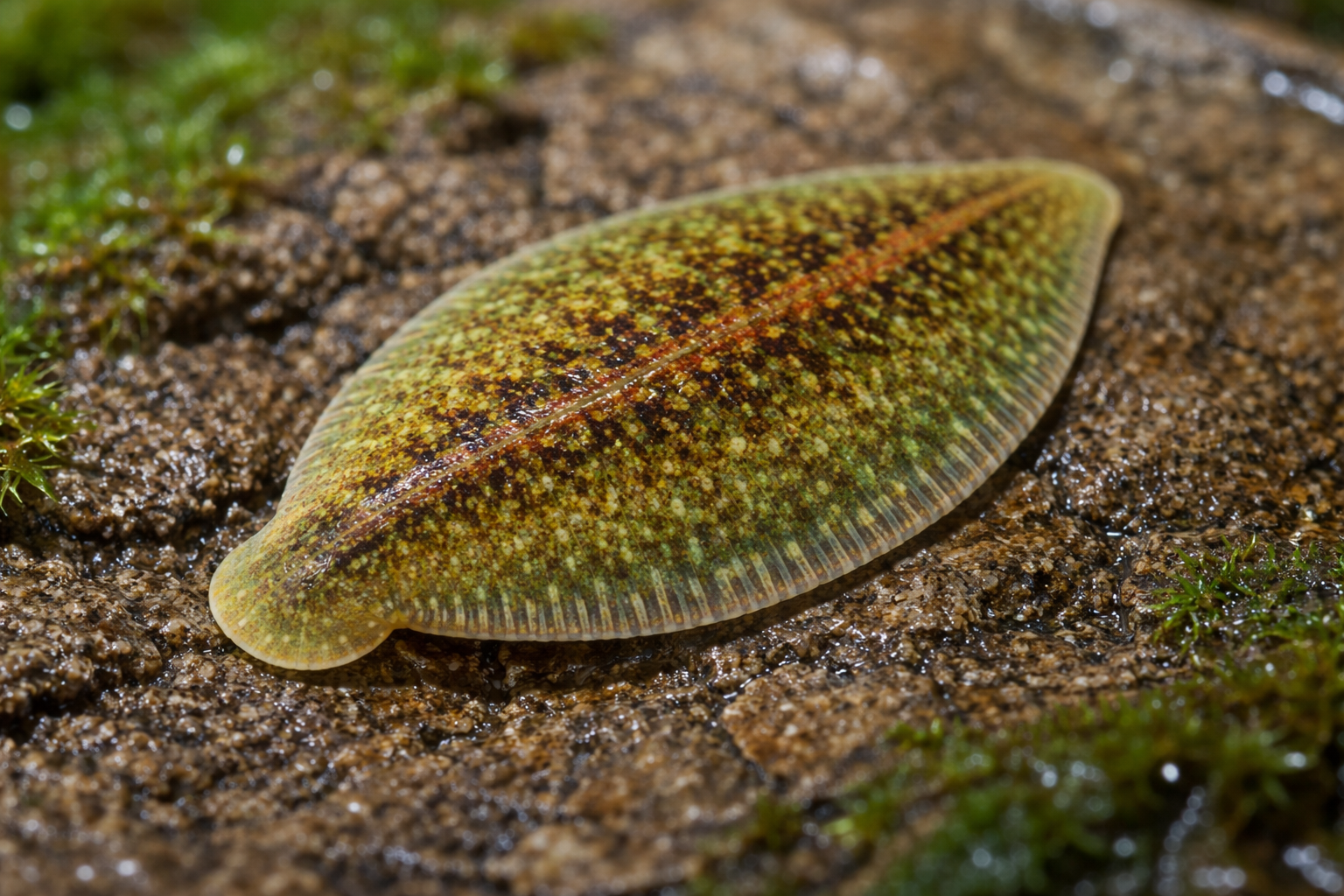
Comments of Clepsine (Glossiphonia)
- Body is greenish, semi-transparent, narrow anteriorly and broadly flattened posteriorly.
- Body measuring about 15 mm in length and 5 mm in breadth.
- Anterior tapering end bears the mouth.
- Anterior sucker is fused with the body and the posterior sucker is pedunculated.
- Each segment contains 3 rings. Three pairs of eyes, protrusiitle proboscis, salivary glands and gut could be observed.
- Crop chambers are elongated in the middle of the body. The intestine bears 4 pairs of lateral caeca.
- Fertilization is by hypodermic impregnation.
- Clepsine is notable for carrying its eggs and young attached to the ventral sucker.
- No cocoon formation. Animal cannot swim but rolls up when alarmed.
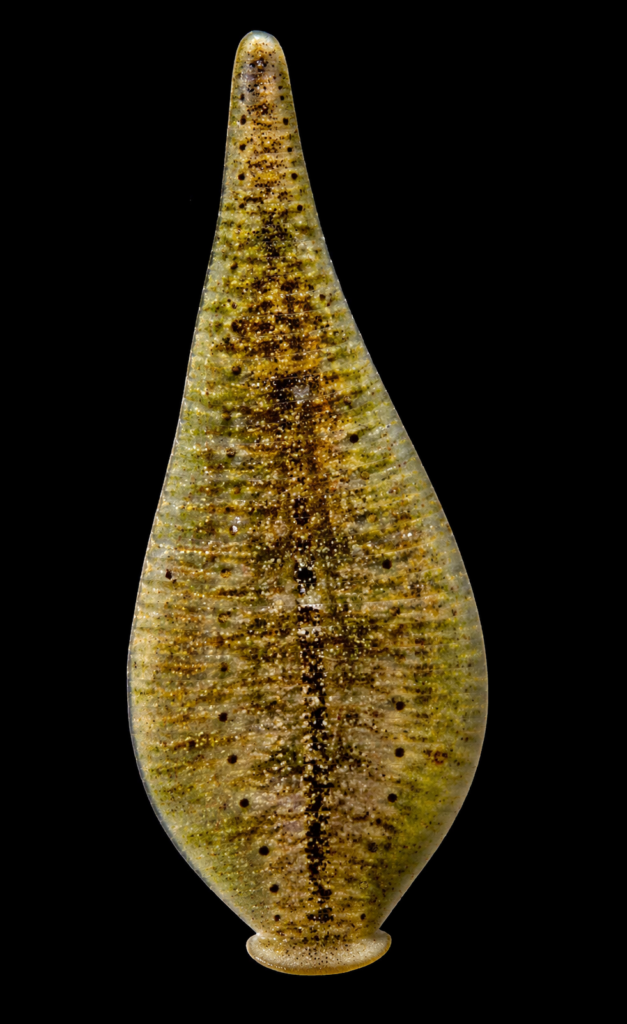
Identification
Since the specimen has narrow anterior end, broad posterior end and all above features hence it is Clepsine.
See other posts also
- OSMOREGULATION OF FRESHWATER AND MARINE INVERTEBRATES
- PRIMITIVE NERVOUS SYSTEM OF COELeNTERATES AND ECHINODERMS
- Larval Forms of Crustaceans
- Larval forms of Mollusca
- Larval Forms in Echinodermata
Discover more from Zoologyverse
Subscribe to get the latest posts sent to your email.