
Crocodile vs alligator vs gharial are large semi-aquatic reptiles belonging to the order Crocodilia. They differ greatly in appearance, habitat, behavior, and distribution, although having many traits in common, like as strong jaws, armored bodies, and a lifestyle related to water. Comprehending these differences facilitates precise identification and emphasizes their ecological significance.
Physical Differences Between Crocodile vs alligator vs gharial
The shape of the snout and visible teeth are two of the simplest methods to identify these reptiles.
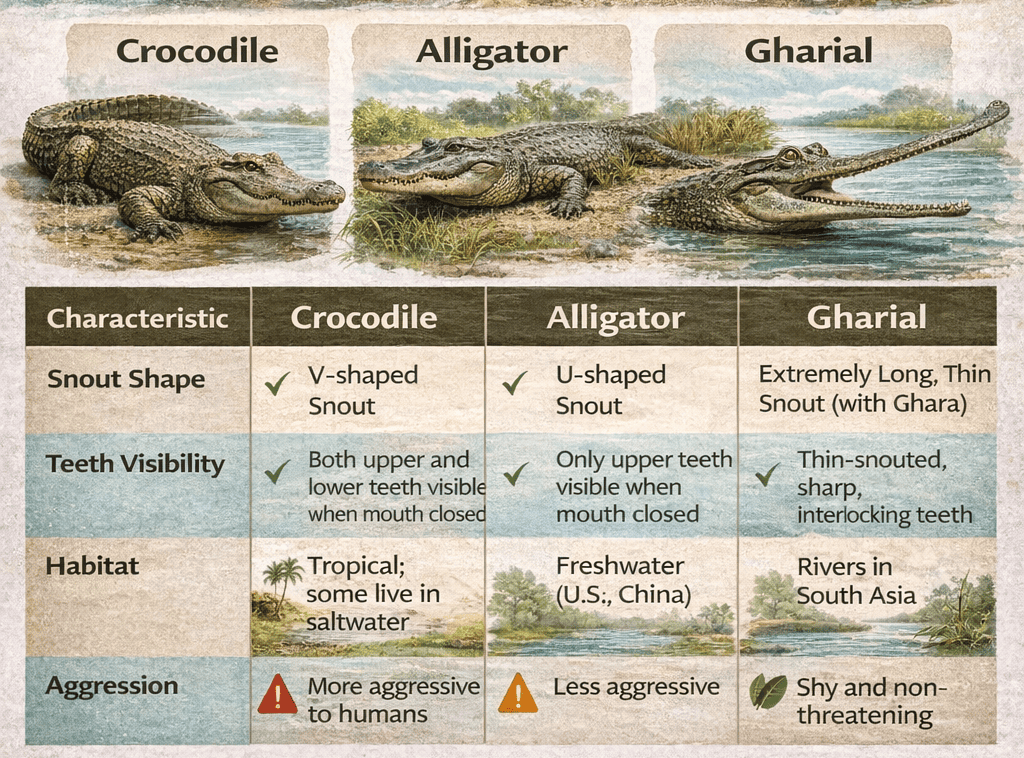
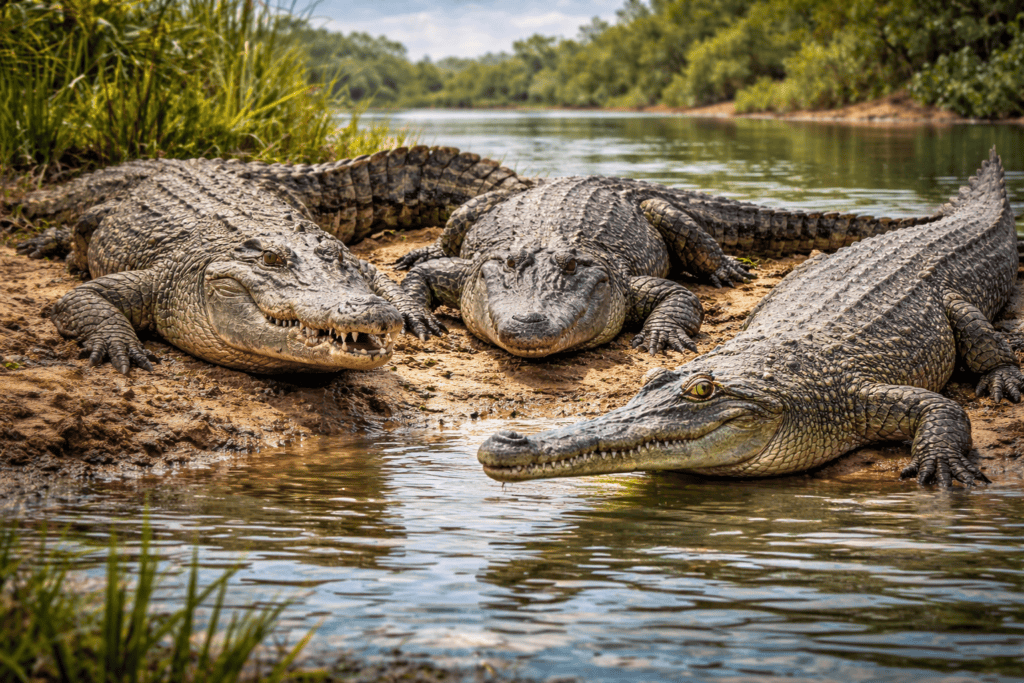
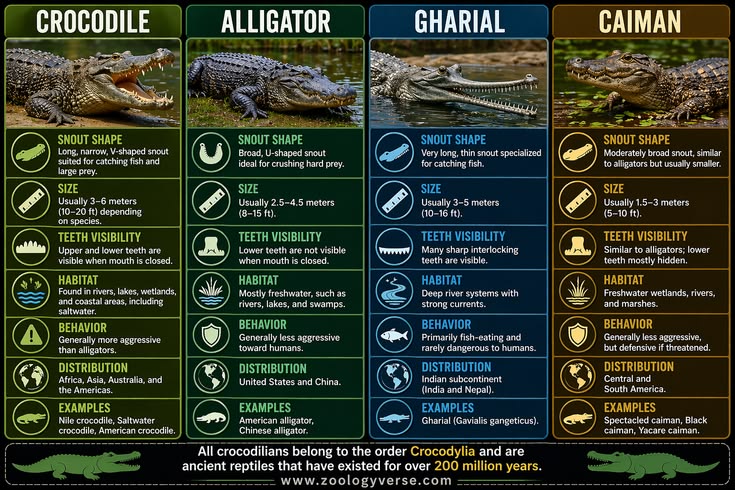
- The nose of a crocodile is long, narrow, and V-shaped. Both the upper and bottom teeth are visible when the mouth is closed, giving them a toothy aspect.
- The snout of alligators is large and formed like a U shape. Because the lower teeth fit into sockets in the upper jaw, only the upper teeth are visible when the mouth is closed.
- Gharials are special because they have a very long, thin snout that is designed to catch fish. A bulb-like structure known as a ghara forms at the tip of the snout in adult males.
Habitat and Distribution
These reptiles live in many water kinds and geographical areas.
- Crocodiles inhabit tropical climates in the Americas, Africa, Asia, and Australia. Estuaries and coastal regions are home to certain animals that can withstand saltwater.
- In China and the United States, alligators are primarily found in freshwater habitats including lakes, marshes, and rivers.
- Only the Indian subcontinent contains gharials, particularly in deep, swift-moving river systems.
Diet and Feeding Behavior
Different snout shapes and habitats have different feeding patterns.
- As opportunistic hunters, crocodiles consume fish, birds, mammals, and even huge animals.
- Alligators typically favor slower freshwater prey, but they also eat fish, turtles, birds, and small animals.
- Gharials mostly consume fish, capturing slippery prey with their keen interlocking teeth and slender jaws.
Behavior and Temperament
- The majority of human attacks are attributed to crocodiles, who are frequently regarded as the most vicious animals.
- Unless provoked, alligators tend to be less hostile and avoid contact with people.
- Because of their jaws that are adapted for fish, gharials are often timid and pose no threat to people.
Size and Body Structure
- Some of the largest reptiles still alive are crocodiles, including the saltwater crocodile, which can grow to a length of over 6 meters.
- Despite their size, alligators are typically smaller than crocodiles.
- Because of their narrow snouts and diet of fish, gharials can be very long, but their bodies are lighter and thinner.
Conservation Status Crocodile vs Alligator vs Gharial
Hunting, pollution, and habitat loss are concerns to all three groups.
- Conservation initiatives have helped some crocodile species recover, while others are still in danger of extinction.
- Alligators, particularly the American alligator, are no longer endangered and constitute a successful conservation story.
- The relatively few natural populations of gharials are critically threatened and urgently need preservation.
Crocodile vs Alligator vs Gharial
Comparison Table Crocodile vs Alligator vs Gharial
| Feature | Crocodile | Alligator | Gharial |
|---|---|---|---|
| Snout Shape | V-shaped | U-shaped | Long, thin |
| Teeth Visibility | Upper & lower visible | Only upper visible | Thin interlocking teeth |
| Habitat | Tropical, some saltwater | Freshwater (U.S., China) | Rivers of South Asia |
| Diet | Large prey & fish | Fish, turtles, small mammals | Mostly fish |
| Aggression | High | Moderate | Very low |
| Conservation | Varies by species | Mostly stable | Critically endangered |
While crocodiles, alligators, and gharials belong to the same reptilian order they differ greatly in their habitat, nutrition, behavior, conservation status, and snout form. Gharials are specialized fish-eaters found only in South Asian rivers, alligators are freshwater creatures with more placid dispositions, while crocodiles are common and frequently violent. Understanding these distinctions is crucial for conservation awareness, animal education, and safe human engagement with these amazing reptiles.
FAQ (Frequently asked questions)
1. What is the main difference between crocodiles and alligators?
Crocodiles have a narrow V-shaped snout with visible upper and lower teeth, while alligators have a broad U-shaped snout where only the upper teeth are visible when the mouth is closed.
2. How is a gharial different from a crocodile and alligator?
Gharials have an extremely long, thin snout designed for catching fish and are mostly found in rivers of the Indian subcontinent, unlike the broader-snouted crocodiles and alligators.
3. Which is more dangerous to humans: crocodile or alligator?
Crocodiles are generally more aggressive and responsible for more human attacks, whereas alligators usually avoid humans unless threatened.
4. Where are crocodiles, alligators, and gharials found?
Crocodiles occur in tropical regions worldwide, alligators mainly in the United States and China, and gharials in rivers of South Asia.
5. Are gharials endangered?
Yes, gharials are critically endangered due to habitat loss, river pollution, and declining fish populations.
See other posts also
- Top 10 Most Venomous Snakes in the World
- Reptiles | Definition, Characteristics, Examples, & Facts
- Crayfish vs Lobster : Differences Explained
- JAW SUSPENSIONS IN VERTEBRATES
- DISSECTION OF UROMASTIX (LIZARD)
Discover more from Zoologyverse
Subscribe to get the latest posts sent to your email.