
There are several centipede species in the genus Scolopendra that are found in both milder temperate regions and tropical regions of the planet. The species differ greatly in size and color. The majority of scolopendra are enormous centipedes. The largest species of centipedes in the world are located in tropical regions and can grow to a length of over 30 cm (12 in). All species of Scolopendra are capable of painful bites, injecting venom through their forcipules, which are modified legs on the first body segment rather than fangs or other mouthparts.
Classification of Scolopendra (Centipede)
| Phylum | Arthropoda | Jointed appendages |
| Sub-phylum | Myriapoda | Exoskeleton thick, antennae 2 pairs, jaws 3 pairs |
| Class | Chilopoda | Free-living Crustacea with compound eyes, biramous antennules, mandibles, 8 thoracic and 6 abdominal segments having appendages. |
| Order | Scolopendromorpha | Carapace present; first three thoracic limbs from maxillipedes. |
| Family | Scolopendridae | Have four ocelli (simple eyes) on each side of the head and only 21 pairs of legs |
| Genus | Scolopendra | Centipede |
Habit and habitat
‘Scolopendra is tropical animal, found in swampy places under bark, stones, decaying wood, etc. It requires absolute moisture. In less than 100% humidity, it loses water through spiracles and dies. It is carnivorous, usually hides by day below stones, plant leaves etc. and runs swiftly by night to prey on insects and earthworms.
Distribution
It is found in India, America (Austin and Texas).
Comments on Scolopendra (Centipede)
- Commonly called as centipede.
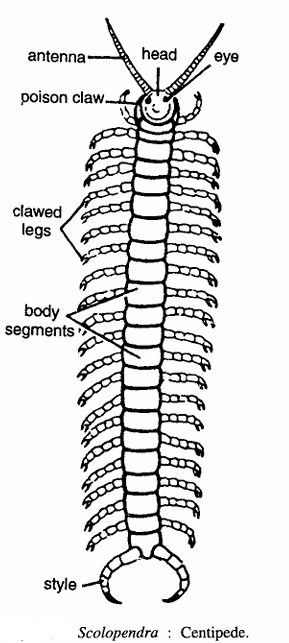
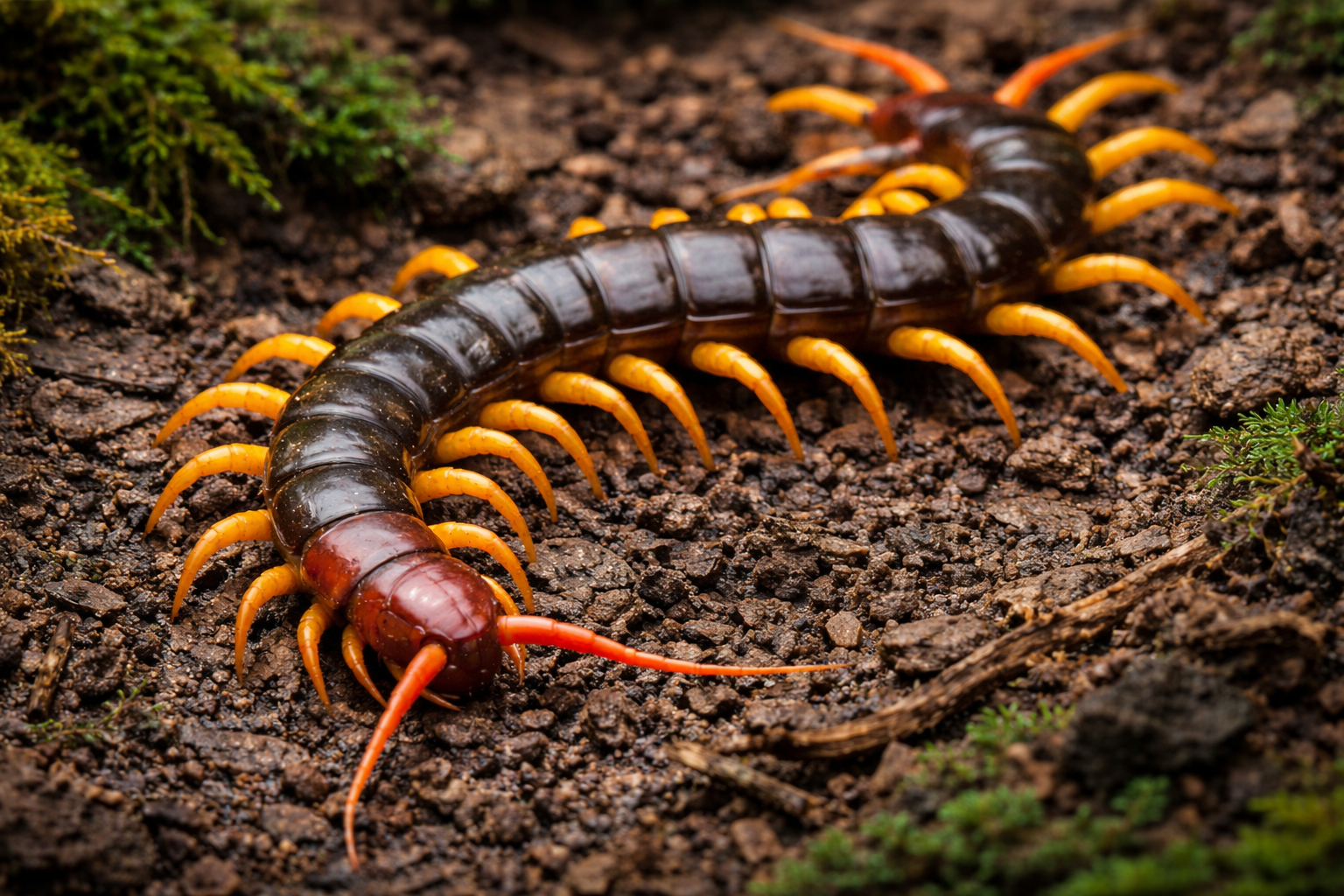
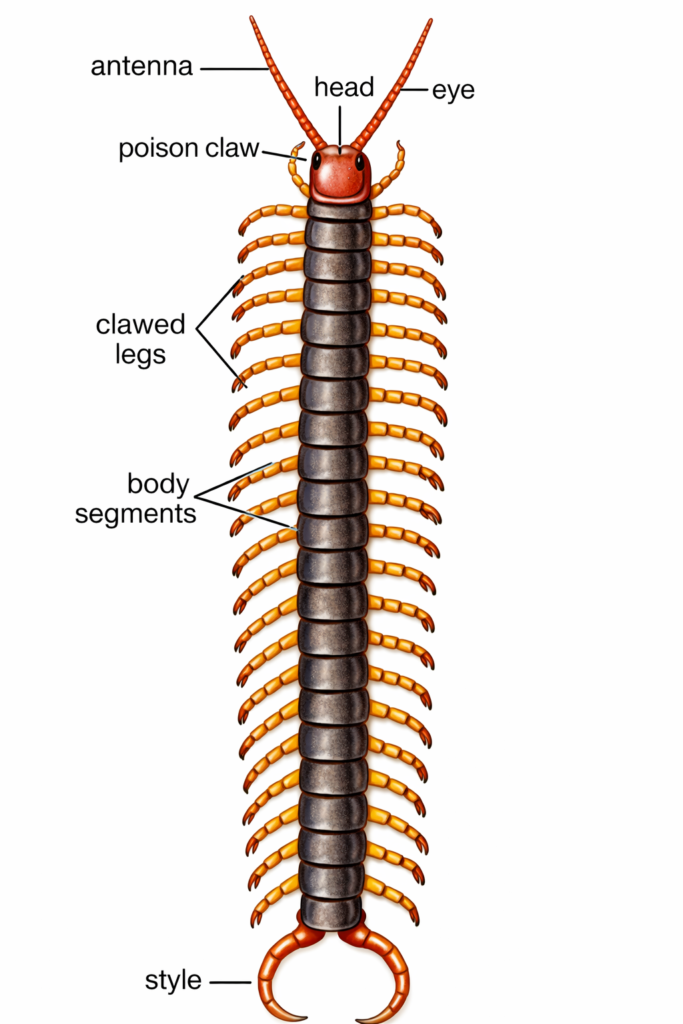
- Body is elongated, dark greenish-brown in colour, dorsoventrally flattened and is divided into a distinct head and a long, segmented trunk or body.
- Head segments are closely fused. Head appendages are long antennae, ocelli and reduced maxillae and mandible visible on ventral side.
- Mouth is guarded by labrum, mandibles and first maxillae.
- Body segments have 21 pairs of walking legs.
- The first pair of legs are curved, clawed and forwardly directed to form maxillipedes or poison claws, while the rest of walking legs have 7 joints.
- All walking legs are similar. Each leg is composed of coxa, trochanter, femur, tibia and 3 tarsi ending in a single claw.
- Paired, oval spiracles or stigmata lie on the pleural areas, above the leg bases on segments 4,6,9,11,13,15,17,19 and 21.
- Last segment bears ventral anus, genital atrium and a pair of anal style.
- There is a single pair of tracheal tufts opening to the exterior on the head.
- Scolopendra is harmful to mankind.
Identification
Since the specimen has a pair of short clawed legs in each segment and all above features, hence it is Scolopendra.
Discover more from Zoologyverse
Subscribe to get the latest posts sent to your email.