frog

 Amphibians | Characteristics, Life Cycle, & Facts

 Amphibians | Characteristics, Life Cycle, & Facts

Introduction to Amphibians Amphibians are a fascinating group of animals that represent a critical evolutionary bridge between aquatic and terrestrial life. Derived from the Greek word amphibios, meaning “double life,” amphibians embody the duality of existence as they inhabit both water and land during different stages of their life cycle. This remarkable ability to adapt […]

 Amphibians | Characteristics, Life Cycle, & Facts Read More »
DEVELOPMENT of frog

DEVELOPMENT OF FROG

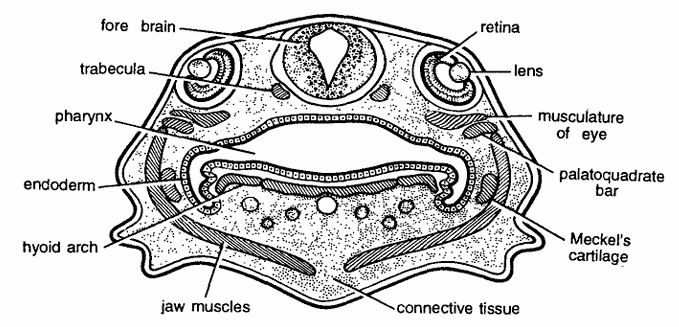
DEVELOPMENT OF FROG DEVELOPMENT OF FROG Frog : Structure of Ovum Comments Identification : Since the egg contains pigmented hemisphere towards animal pole, hence it is ovum of frog. DEVELOPMENT OF FROG : V.S. Passing Through Blastula Comments Identification : Since the egg contains blastocoel and above features hence it is V. S. through blastula

DEVELOPMENT OF FROG Read More »

AMPHIBIAN SLIDES (FROG)

AMPHIBIAN SLIDES (FROG)

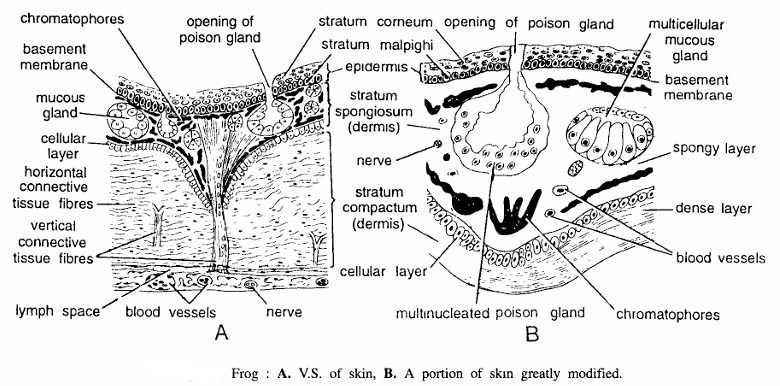
Amphibian slides of the frog are commonly used in zoology practicals to study the structural organization of a typical vertebrate. These slides often include transverse and longitudinal sections of skin, muscle, intestine, liver, kidney, ovary, testis, and blood vessels. Students examine frog slides to understand amphibian adaptations, organ systems, epithelial types, and basic vertebrate anatomy.

AMPHIBIAN SLIDES (FROG) Read More »

DISSECTION OF FROG

DISSECTION OF FROG

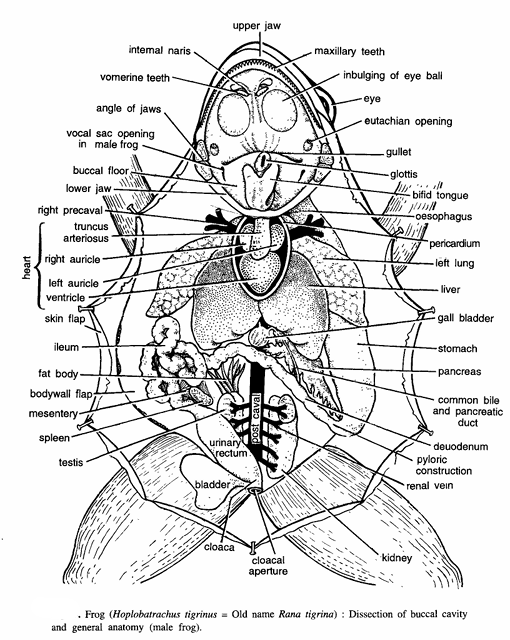
Dissection of Frog : External Features For Dissection of Frog Procedure :- Note and examine the following in the living frog For detailed external morphology, take a frog freshly killed with chloroform vapour. Draw a lateral or dorsal view of the frog. Examine and note the following Dissection of Frog : Bucco-pharyngeal Cavity Procedure. Open

DISSECTION OF FROG Read More »

Classification of Bufo : Common Toad

Bufo | Common Frog

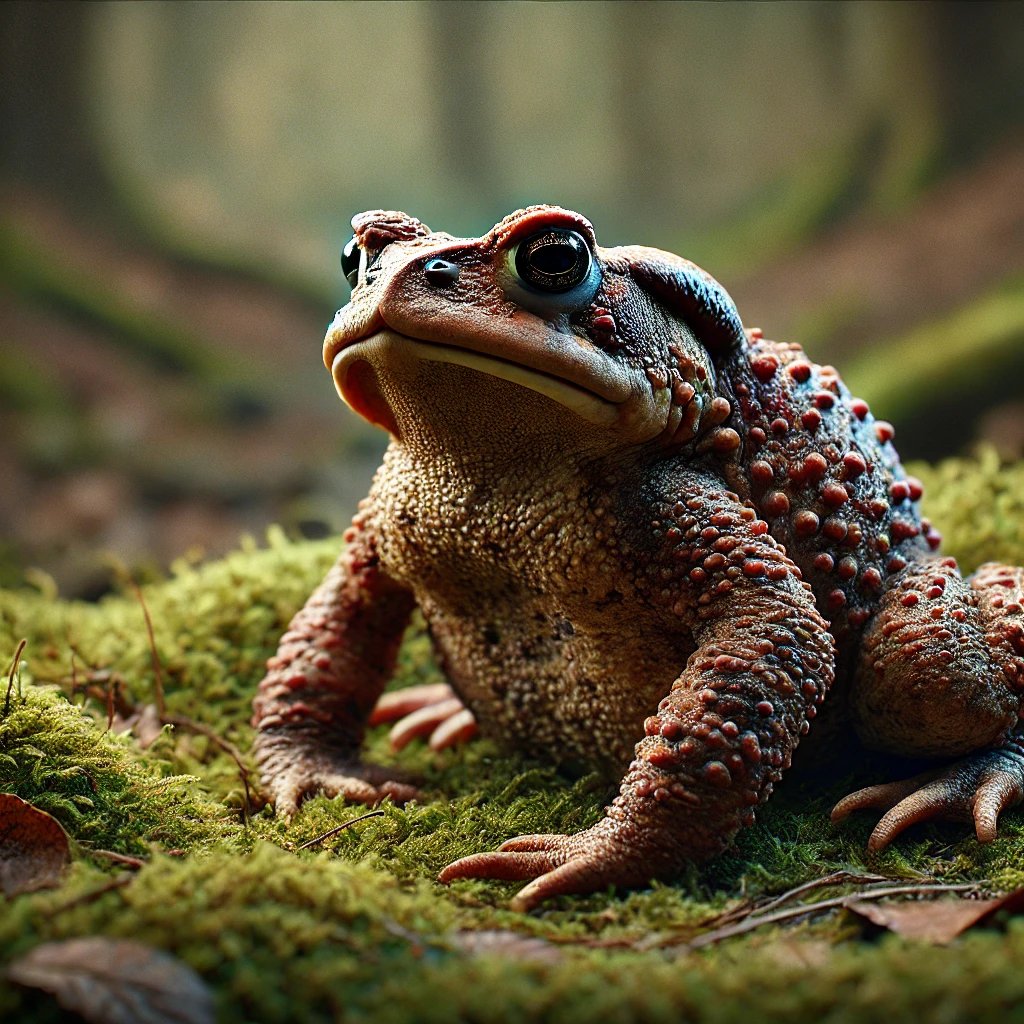
Bufo is a genus of true toads in the amphibian family Bufoidae. According to the traditional definition, this genus was a “Wastebasket” genus that included numerous toads living in many parts of the world, but after taxonomic review, most were transferred to other genera, leaving the genus with only 17 extant species from Europe, North

Bufo | Common Frog Read More »

Classification of Hyla : Tree Frog

Hyla | Tree Frog

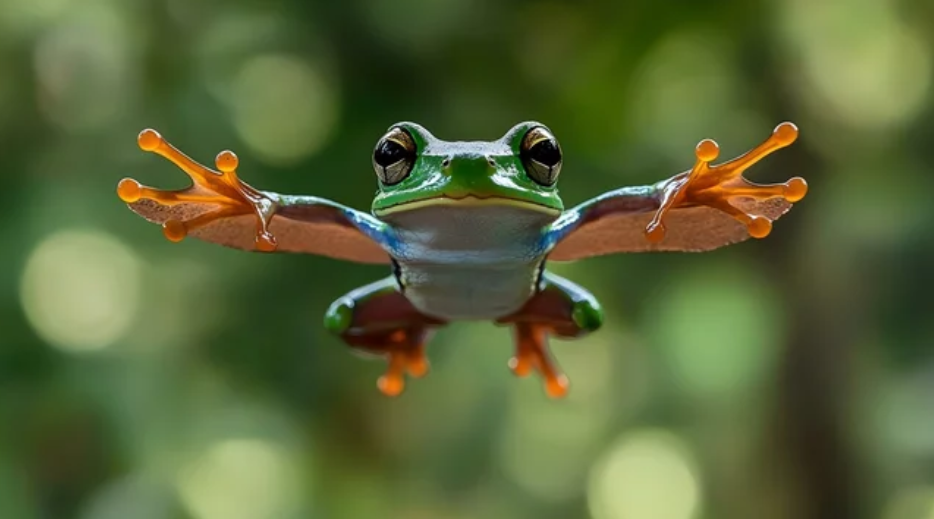
Hyla (Tree frogs), commonly known as Holarctic tree frogs, are a genus of tree frogs (family Hylaidae) that consists of 17 extant species found in Europe, Asia, and North Africa, including the European tree frog (Hyla arborea). Formerly a “wastebasket” genus with over 300 species, it now refers to a smaller group of mainly arboreal amphibians.

Hyla | Tree Frog Read More »

Classification of Pipa : Surinam Toad

Pipa | Surinam Toad

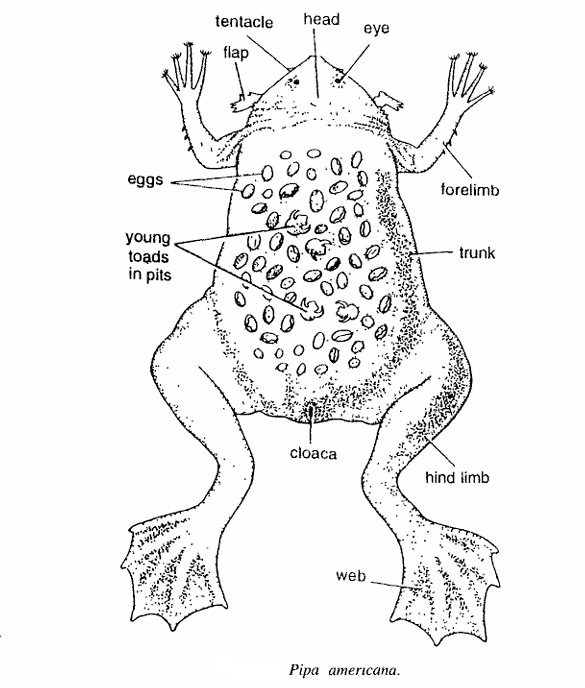
The common Surinam toad, Surinamese toad, or star toad (Pipa pipa), is a completely aquatic frog of the family Pipidae, widely distributed in much of tropical South America and the island of Trinidad. Females of this species are well known for “nurturing” eggs in honeycomb-like cavities directly on the skin of their backs, and releasing

Pipa | Surinam Toad Read More »

Classification of Alytes : Midwife Toad

Alytes | Midwife Toad

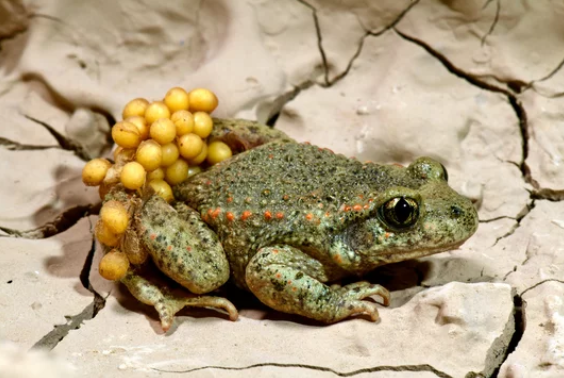
Introduction Alytes, commonly known as the Midwife Toads, is a small genus of amphibians found mainly in Europe and North Africa. These toads are famous for their unique parental care behavior—males carry long strings of fertilized eggs wrapped around their hind legs until the tadpoles are ready to hatch. Midwife Toads prefer rocky habitats, woodlands,

Alytes | Midwife Toad Read More »