
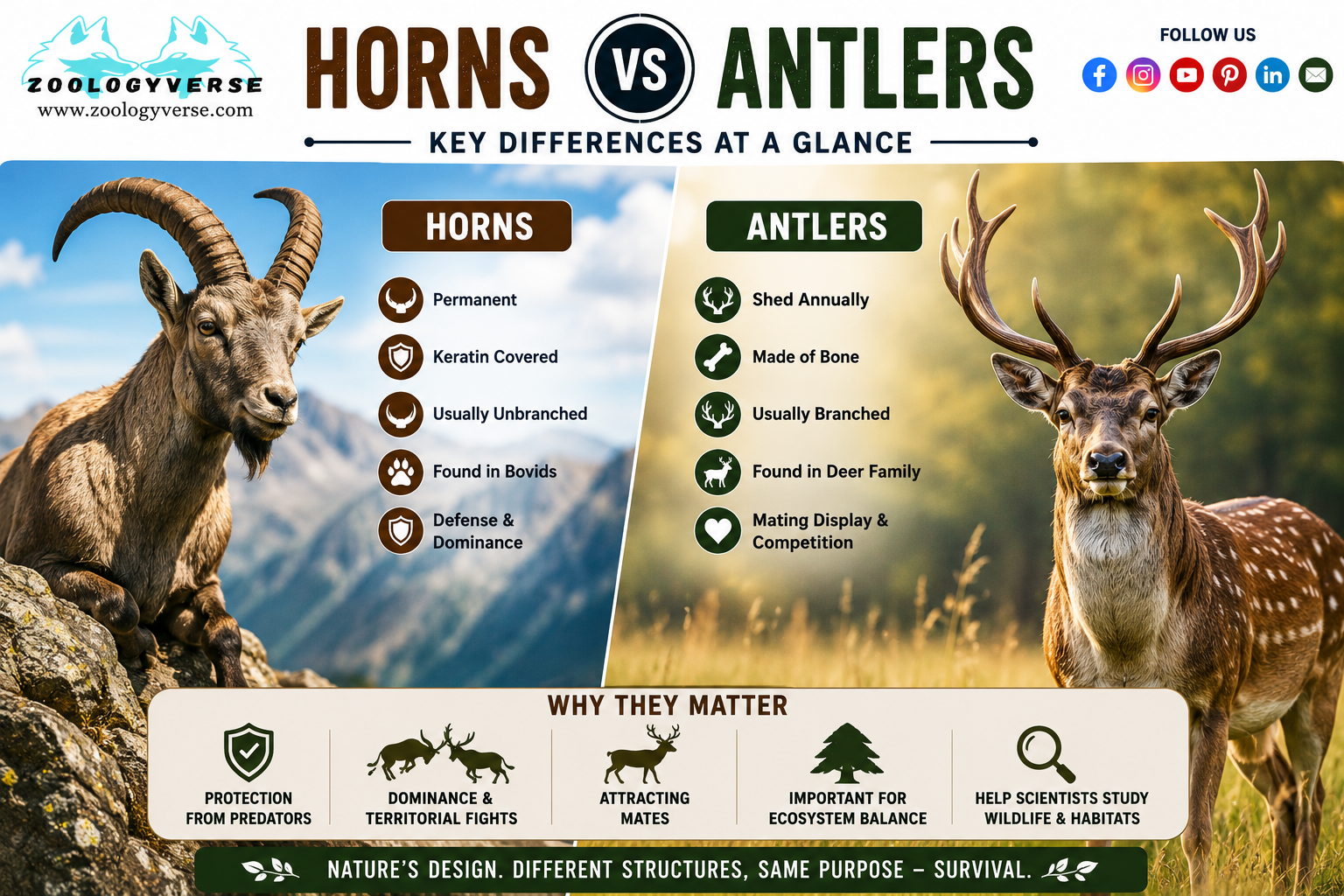
Horns vs Antlers : the Key Differences :- Among the many remarkable adaptations found in nature are horns and antlers. Due of their initial similarity, these remarkable structures are frequently mistaken for one another. But in terms of form, development pattern, function, and the animals that have them, horns and antlers are quite different.
The main distinctions between horns vs antlers, their roles in the animal kingdom, and the reasons it’s important for wildlife enthusiasts, students, and nature lovers to grasp them are all covered in this article.
What Are Horns?
A sheath composed of keratin, the same protein found in human hair and nails, covers horns, which are permanent bony protrusion. They are often seen in members of the Bovidae family and grow continually throughout an animal’s life.
Animals with horns include:
- Goats
- Sheep
- Cows
- Buffalo
- Antelopes
Features of Horns
- Structures that are permanent and do not shed
- Usually unbranched
- found in many animals in both males and females.
- composed of a keratin-covered bone core
- Continue to develop throughout your life.
The primary purposes of horns are territorial protection, dominance conflicts, defense, and mating attraction.
What Are Antlers?
Members of the Cervidae family of deer grow and lose antlers, which are huge, branching bone formations, every year.
Animals with antlers include:
- Deer
- Elk
- Moose
- Reindeer
Features of Antlers
- Every year, shed and regenerate
- composed only of bone
- Typically branched
- mostly exclusive to men (with the exception of female reindeer).
- Grow quickly in specific seasons
One of the animal kingdom’s fastest-growing tissues is the antler. They are covered in velvet, a velvety skin that provides blood flow and nutrition throughout growing.
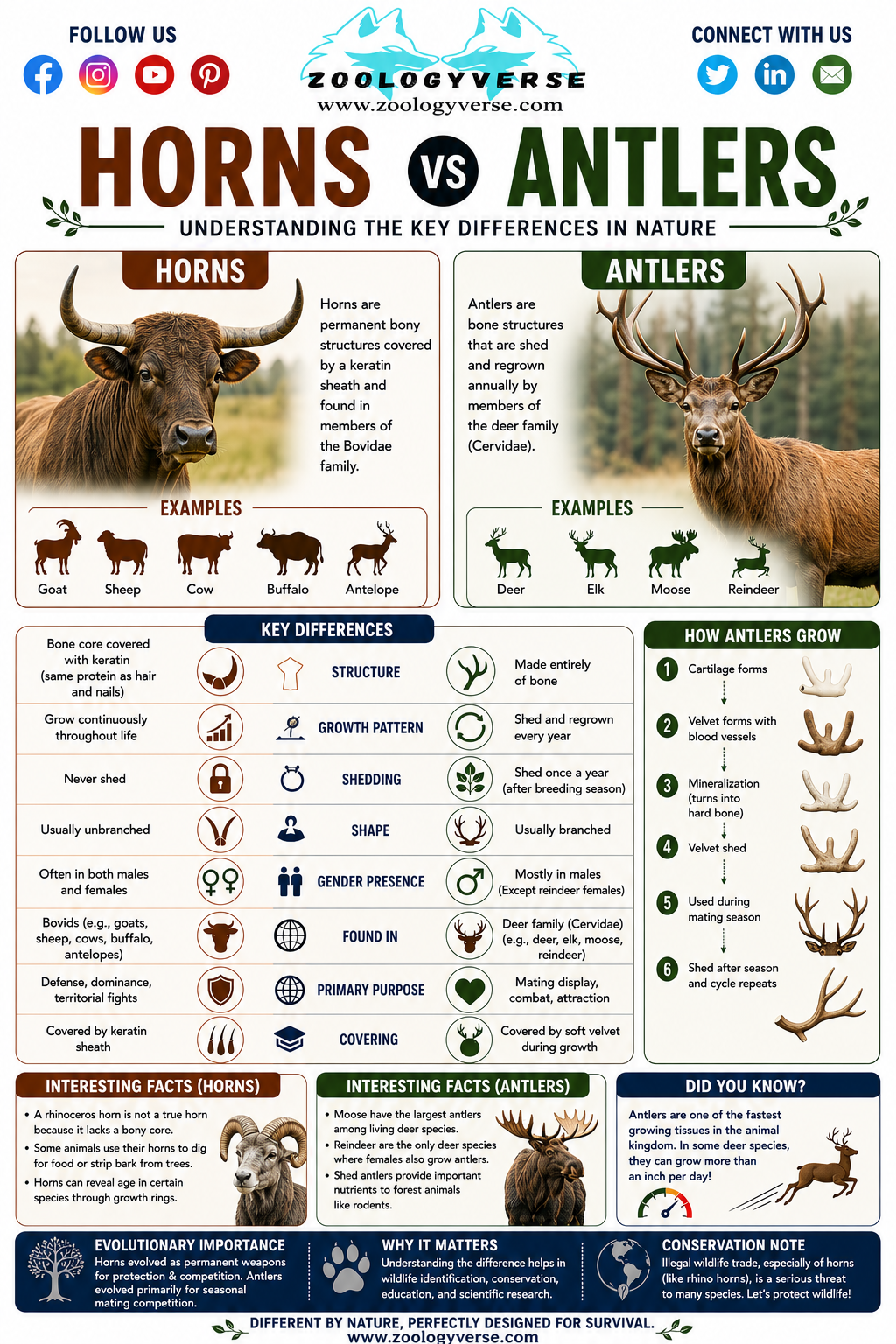
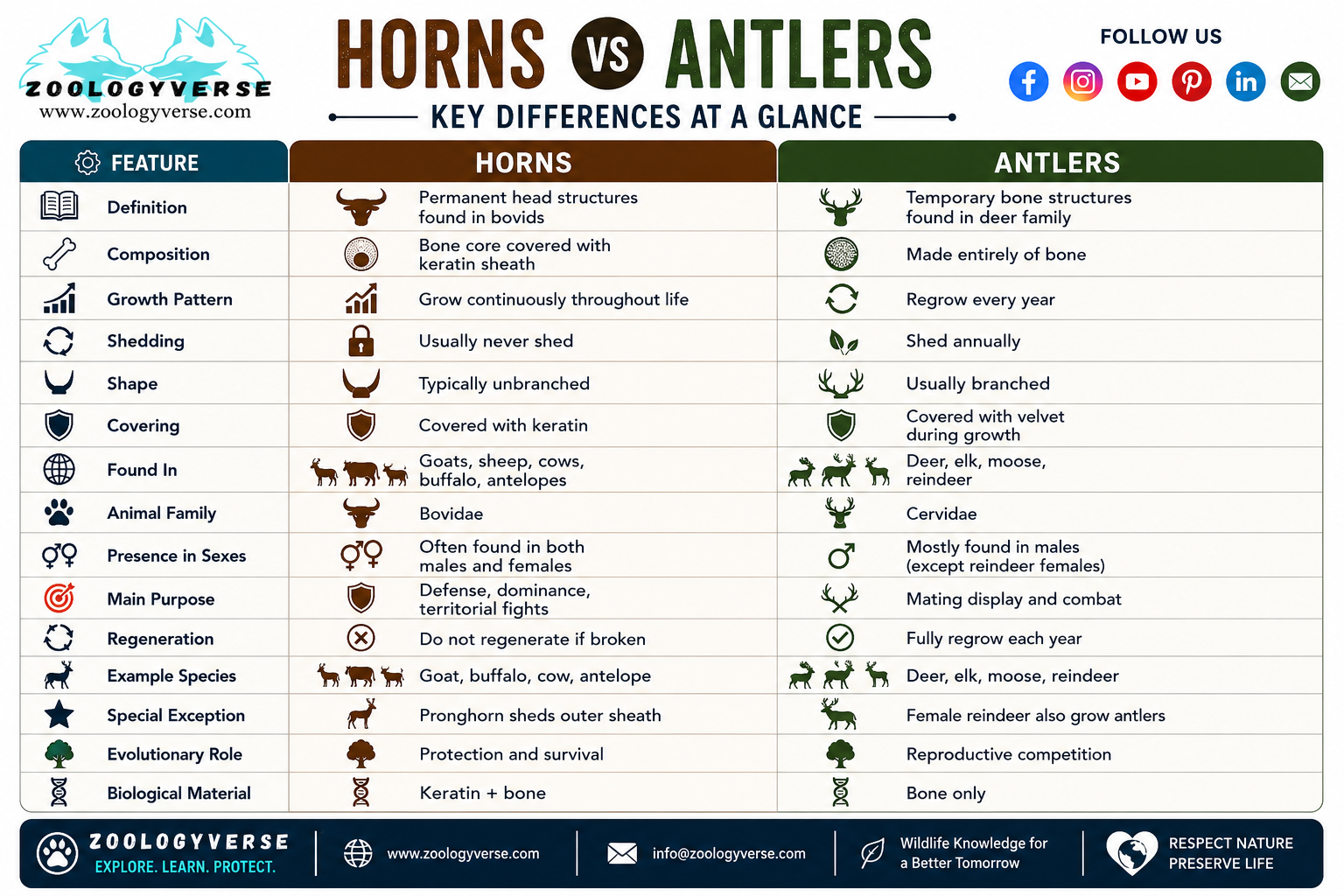
Horns vs Antlers: Major Differences
| Feature | Horns | Antlers |
|---|---|---|
| Structure | Bone covered with keratin | Solid bone |
| Growth Pattern | Continuous growth | Regrown annually |
| Shedding | Never shed | Shed every year |
| Shape | Usually unbranched | Branched |
| Found In | Bovids | Cervidae |
| Gender Presence | Often both sexes | Mostly males |
| Covering | Keratin sheath | Velvet during growth |
| Purpose | Defense and dominance | Mating displays and combat |
Why Do Animals Have Horns and Antlers?
- Protection against Predators
Animals protect themselves from predators by using their horns and antlers. These strong structures can be used by species like elk and buffalo to efficiently prevent attackers.
- Rivalry for Partners
During mating seasons, male animals often engage in combat with rivals. Strength and genetic fitness are frequently indicated by larger horns or antlers.
- Domination in Society
These structures aid in the establishment of hierarchy within herds or groups in several species.
- Attraction
Because they indicate health and maturity, large antlers in particular might draw females throughout the breeding season.
How Antlers Grow So Quickly
One of the organs in nature that grows the fastest is the antler. During their peak development, antlers in certain deer species can grow more than an inch every day.
The process of growth consists of:
- Soft cartilage formation
- velvet covering that is rich in blood
- Hard bone mineralization
- Velvet shedding
- Use in the mating season
- Shedding every year following the breeding season
Every year, this cycle is repeated.
Interesting Facts About Horns and Antlers
Horn Facts
- Since a rhinoceros horn lacks a bony core, it cannot be considered a real horn.
- Certain animals with horns utilize them to remove tree bark or dig for food.
- In some species, growth rings on the horns might indicate age.
Facts about Antlers
- Of all the deer species that are still in existence, moose have the biggest antlers.
- The only species of deer in which females get antlers are reindeer.
- Rodents and other woodland animals receive vital nutrients from shed antlers.
Evolutionary Significance
- Natural selection led to the evolution of both horns and antlers in order to increase survival and reproductive success.
- Particularly in wide grasslands where predators are prevalent, horns evolved as permanent weapons for competition and defense.
- The main reason antlers arose was to compete in seasonal mating. Animals can grow stronger and larger antlers every season since they shed them every year.
In popular culture, horns versus antlers
A common misconception is that all animal headgear is referred to as antlers. Goats, for instance, are frequently mistakenly described as having antlers while in fact they have horns.
Knowing the difference advances scientific understanding, hunting identification, and wildlife education.
Which Are Stronger: Antlers or Horns?
- The goal determines the response. Because horns are permanent and strengthened with keratin, they are typically more resilient.
- Antlers are lighter and highly specialized for mating contests since they are designed for seasonal combat and exhibition.
- Both are very powerful tools for evolution.
Significance for the Environment and Conservation
Antlers and horns are used in ecological studies and conservation. They are used by scientists to investigate:
- Age of animals
- Dietary habits
- Hormone balance
- Genetics of populations
- Quality of habitat
The illegal trade in wildlife horns, particularly rhino horns, continues to be a significant global conservation concern.
In conclusion (Horns vs Antlers)
Horns vs Antlers Despite their similar appearance, horns and antlers are biologically quite different. Antlers are transient bone structures that deer species lose once a year, whereas horns are permanent, keratin-covered features mostly found in bovids.
A deeper understanding of animal behavior, evolution, and wildlife ecology can be gained by distinguishing between horns and antlers. Understanding these differences enables you to appreciate the amazing diversity of the animal kingdom, regardless of whether you are a student, wildlife enthusiast, or nature blogger.
FAQs, or frequently asked questions
Are antlers and horns composed of the same substance? Answer :- No, antlers are formed entirely of bone, whereas horns are made of bone covered in keratin.
When cut, do antlers bleed? Answer :- Indeed, they have nerves and blood vessels during the velvet stage.
Can females grow antlers? Answer :- Antlers are typically exclusively grown by males, but female reindeer can also grow them.
Do shattered horns grow back? Answer :- When badly wounded, horns typically do not entirely regrow.
Why do deer lose their antlers each year? Answer :- After the breeding season, hormonal changes cause deer to shed their antlers, which they regrow the following year.
See Other Posts Also
- OVIBOS MOSCHATUS (MUSK OX)
- ELEPHAS MAXIMUS (ASIATIC ELEPHANT)
- Integument or Skin and its Derivatives in Vertebrates
- Placenta in Mammals (Placentation)
Also Follow Us on
Discover more from Zoologyverse
Subscribe to get the latest posts sent to your email.