
Small, thin marine annelid worms in the genus Polygordius are commonly found in intertidal sandy sands all around the world. Known as “knot worms” due to their propensity to knot themselves, they are distinguished by a specialized larval stage and smooth, cylindrical bodies devoid of external segmentation. They are members of the class Polychaeta within the phylum Annelida.
Classification of Polygordius
Kingdom :- Animalia (Multicellular eukaryotic organisms)
Phylum :- Annelida (Segmented worms with true coelom and metamerism)
Class :- Archiannelida (Primitive annelids.)
Family :- Polygordiidae (Short tentacles.)
Genus :- Polygordius
Habit and habitat
Polygordius is a small, simple, aberrant, marine scavenger worm.
Distribution
It is found living in the sand of the European seas.
Comments of Polygordius
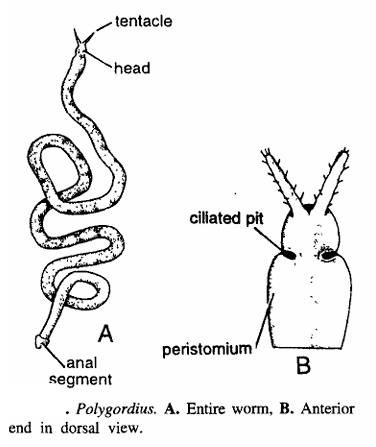
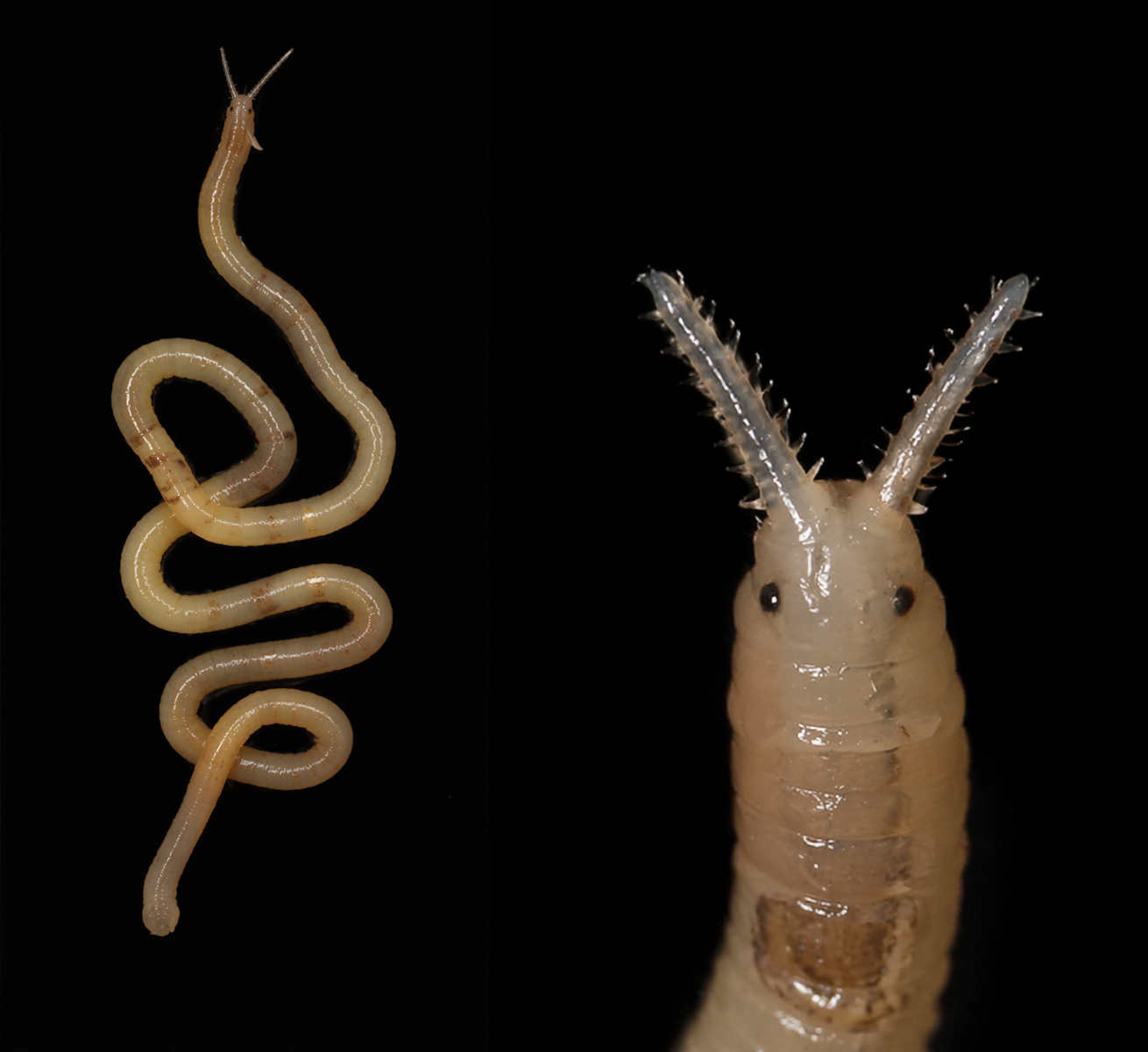
- Body is narrow, elongated, cylindrical and resembles larval polychaetes. Divisible into head and body segments, measuring 30 to 100 mm.
- Head comprises of small prostomium and large peristomium.
- Head bears a pair of small prostomial tentacles, ventral mouth and ciliated pits.
- External segmentation of the body is faintly marked by grooves in anterior region and clearly marked in posterior region.
- Coelom is divided by septa, last segment contains anus.
- Setae, parapodia, cirri and gills are absent.
- Sexes are separate. Gonads develop in posterior segments. There are no reproductive ducts.
Identification
Since the specimen contains small prostomium and large peristomium and all above features, hence it is Polygordius.
See other posts also
- EXCRETION IN HIGHER TERRESTRIAL INVERTEBRATES
- LOCOMOTION IN PROTOZOA
- HYDROSTATIC MOVEMENT
- PHORONIDA – STRUCTURE, AFFINITY AND LIFE HISTORY
- ENTOPROCTA -STRUCTURE, LIFE HISTORY, AFFNITIES
Discover more from Zoologyverse
Subscribe to get the latest posts sent to your email.