
The Aravalli Crisis 2025: A Battle for India’s Ecological Shield
The Aravalli Range, one of the world’s oldest geological features, is currently the center of an intense legal and environmental battle. Spanning nearly 700 kilometers across Gujarat, Rajasthan, Haryana, and Delhi, these hills serve as the primary barrier against the expansion of the Thar Desert and the “green lungs” for North India. However, recent regulatory changes in late 2025 have sparked a national controversy that pits industrial growth against the survival of a critical ecosystem.
The Core of the Problem in Aravalli: The “100-Metre” Definition
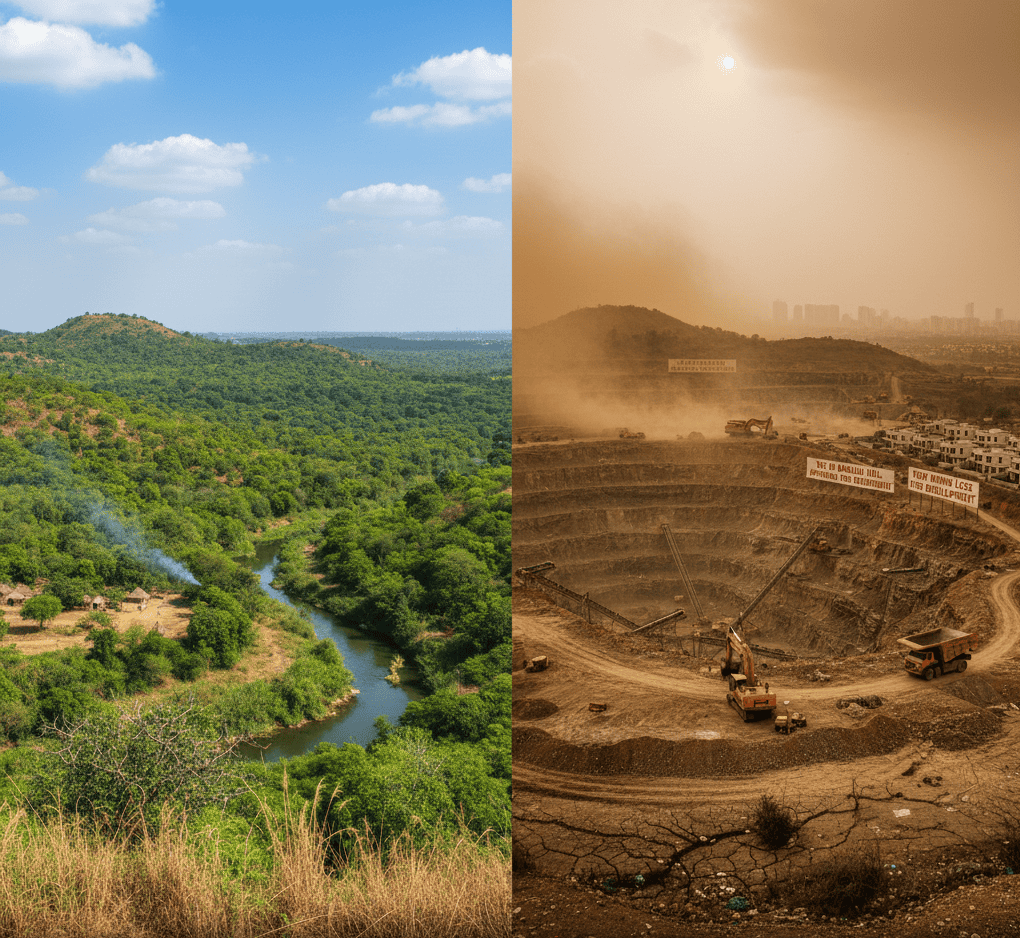
The most significant development in the Aravalli problem occurred in November 2025, when a Supreme Court ruling aimed at providing “uniformity” to the range’s protection inadvertently created a massive legal loophole.
- The New Threshold: The court accepted a definition stating that only landforms rising 100 metres or more above the local ground level are legally classified as “Aravalli Hills.”
- The Exclusionary Effect: Environmental experts warn that this height-based classification excludes nearly 90% of the range. Most of the Aravallis in Haryana and parts of Rajasthan consist of low-lying ridges, hillocks, and plateaus that fall below this 100-metre mark.
- Losing the ‘hill’ status removes strict forest conservation protections and directly exposes these areas to real estate development and stone quarrying.
The Ban on Mining on Aravalli: A Temporary Shield
In response to widespread public protests and the viral #SaveAravalli movement, the Union Ministry of Environment, Forest and Climate Change (MoEFCC) issued a landmark directive on December 24, 2025.
Key Provisions of the Directives:
- Moratorium on New Leases – A total ban now prevents authorities in Rajasthan, Haryana, and Gujarat from issuing any new mining leases within the Aravalli territory.”
- The MPSM Framework – Authorities will not permit any new mining activity until the Indian Council of Forestry Research and Education (ICFRE) finalizes the Management Plan for Sustainable Mining (MPSM).
- Surveillance: The government has pledged to use drone mapping and satellite imagery to monitor illegal mining in real-time.
Why the Aravallis hills Matter: Ecological Consequences
The degradation of the Aravallis is not just a local issue; it is an existential threat to the National Capital Region (NCR) and North India.
The Desert Barrier
The Aravallis act as a natural wall that prevents the hot, dust-laden winds of the Thar Desert from moving into the fertile plains of the Indo-Gangetic region.Flattening the hills could accelerate desertification and turn Delhi and surrounding areas into an extension of the desert.
Groundwater Recharge
The fractured quartz rocks of the Aravallis make the range an incredibly efficient groundwater recharge zone. As water flows down these slopes, it replenishes the parched aquifers of Rajasthan and Haryana. Mining disrupts these natural channels, leading to a catastrophic drop in the water table.
Air Quality and Carbon Sink
With Delhi consistently ranking among the world’s most polluted cities, the Aravallis are the last remaining barrier that absorbs carbon and traps particulate matter. The loss of forest cover on these hills directly translates to deadlier AQI levels during the winter months.
Social and Political Impact of Aravalli hills
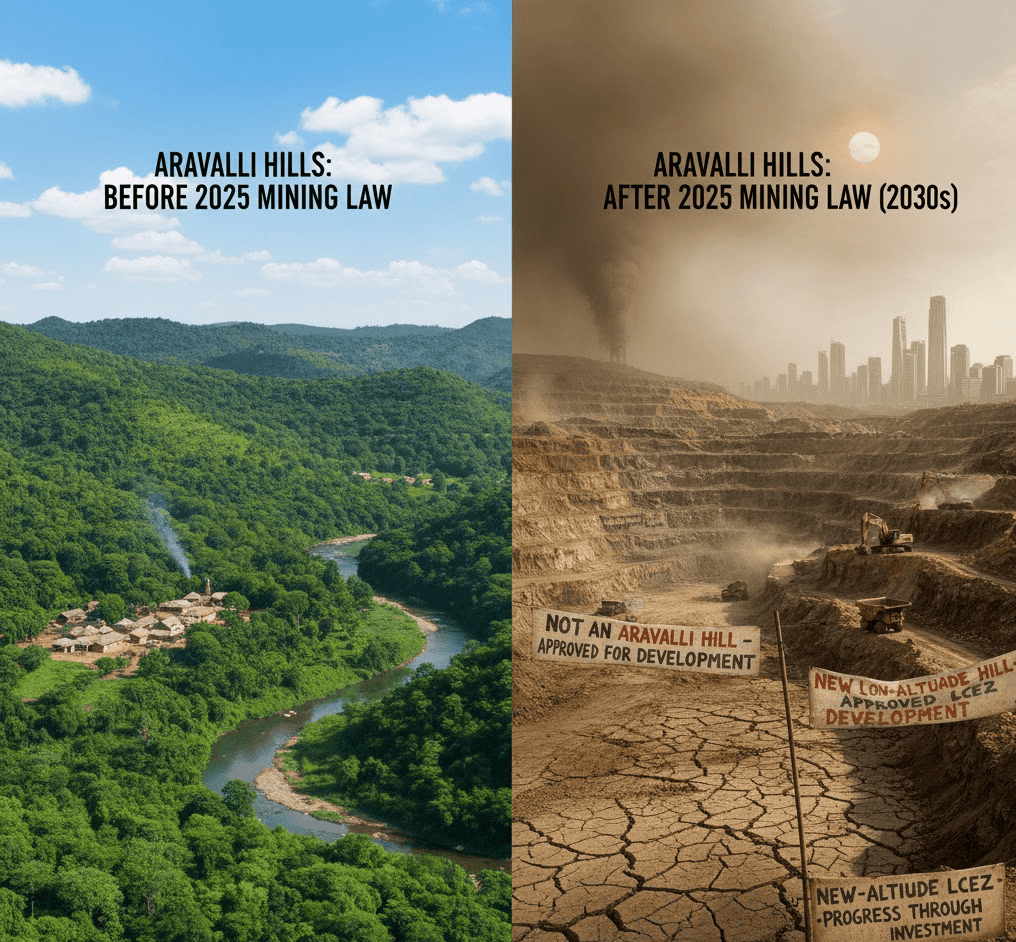
The Aravalli problem has triggered a rare instance of mass digital activism in India. The #SaveAravalli campaign has seen participation from students, climate activists, and urban residents alike.
- Political Conflict: While the Union Government maintains that the new definition is “scientifically grounded” to prevent arbitrary land grabbing, opposition leaders and environmentalists claim the move favors “mining mafias” and big real estate developers.
- Tribal Communities: Local indigenous populations, who have protected these forests for generations, are also at risk of displacement as land status changes from “forest” to “available for development.
Identification of At-Risk Zones
While the entire range is under pressure, specific zones are currently identified as high-risk:
- The Southern Ridge (Delhi): Facing immense pressure from urban encroachment.
- Maniari and Mewat (Haryana): Areas with low-altitude hills that fall under the new 100-metre exclusion rule.
- Sariska and Alwar (Rajasthan): Buffer zones that are threatened by the loophole for “strategic minerals” mining.
The Path Forward
The Aravalli crisis of 2025 represents a turning point for India’s environmental policy. The upcoming MPSM report by the ICFRE will be the deciding factor in whether these hills remain a protected forest or become an industrial graveyard.
The consensus among scientists is clear: the Aravallis must be protected as a contiguous ecological corridor, regardless of height, to ensure the climate stability of Northern India.
Impact on the Construction Industry on Aravalli hills (2025–26)
The mining ban and the new height-based definition are sending shockwaves through the real estate and infrastructure sectors, particularly in the Delhi-NCR, Haryana, and Rajasthan clusters.
1. Material Scarcity and Price Hikes
The Aravallis are a primary source of silica sand, quartz, limestone, and stone aggregates (bajri).
- Supply Crunch: With a total freeze on new leases, the industry is relying on existing, strictly regulated mines. This has led to an immediate tightening of the supply chain.
- Cost Escalation: Construction costs in Gurgaon and Faridabad have reportedly seen a surge as builders are forced to source raw materials from more distant locations, significantly increasing transportation overheads.
The Real Estate “Loophole”
While the mining ban is a blow to material suppliers, the 100-metre rule potentially benefits real estate developers in the short term.
- Land Deregulation: By reclassifying low-lying ridges (below 100m) as “non-hills,” vast tracts of land in the NCR may lose their “forest” or “protected” status.
- Development Potential: Industry analysts suggest this could unlock thousands of acres for luxury farmhouses, resorts, and residential complexes, provided they can bypass the temporary freeze on construction in ecologically sensitive zones.
Mapping the “Excluded” Zones of Aravalli hills
The 100-metre rule creates a fragmented landscape. Below is a conceptual breakdown of how the range is now legally divided.
| Feature | Legal Status (Post-Nov 2025) | Ecological Function |
| Peaks >100m | Protected Aravalli Hill | Core habitat, micro-climate regulation. |
| Clusters within 500m | Protected Aravalli Range | Continuous wildlife corridors (e.g., Sariska-Delhi). |
| Ridges <100m | Exempt/Legally Non-Hill | Groundwater recharge, desert barrier. |
| Supporting Slopes | Included if attached to >100m hill | Soil stability and erosion control. |
The Groundwater and Desertification Crisis
Environmentalists, including “Waterman of India” Rajendra Singh, have warned that the height-based definition is a “death warrant” for the region’s hydrology.
- Aquifer Damage: Most groundwater recharge happens at the foothills and lower ridges (the exact areas now losing protection). In Gurugram and South Haryana, where the water table is already at critical levels, the destruction of these low-lying hills could lead to permanent water scarcity.
- The “Dust Bowl” Risk: The Aravallis act as a windbreak. Redefining and potentially flattening the lower ridges creates “gaps” in this natural wall. This allows sand from the Thar Desert to drift into fertile plains, increasing the frequency and intensity of dust storms in Western Uttar Pradesh and Delhi.
The Next Step: The MPSM Report
The future of the range now hinges on the Indian Council of Forestry Research and Education (ICFRE).
- Comprehensive Mapping: The ICFRE is currently using drone technology and satellite data to create a “science-based” map.
- Inviolate Zones: This plan (MPSM) will identify “no-go” areas that must remain untouched regardless of their height, focusing on wildlife corridors and perennial water bodies.
The Aravalli debate: why the 100-metre rule has sparked concerns
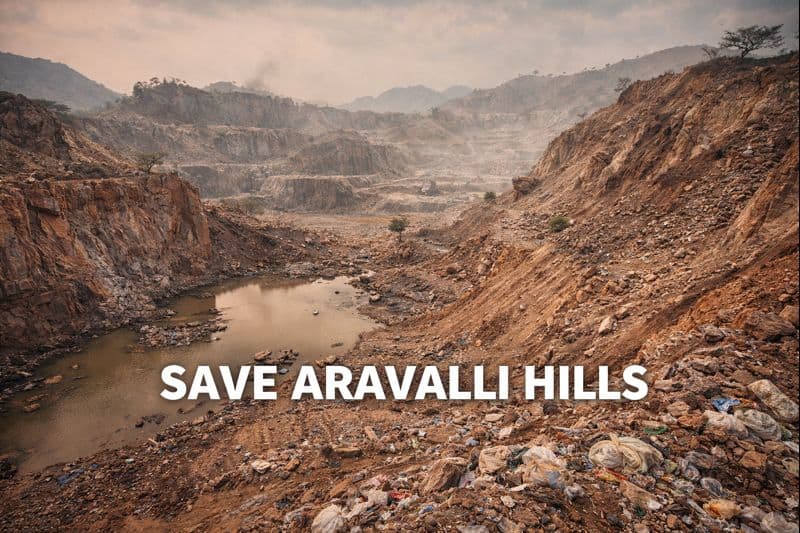
This video provides a deeper look into the environmentalists’ perspective on why height alone is an insufficient measure for ecological protection.
References
- Ministry of Environment, Forest and Climate Change – Official Directives 2025
- Supreme Court of India – Environment Bench Rulings
- Forest Survey of India (FSI) – Aravalli Status Report
- Indian Council of Forestry Research and Education (ICFRE) – Sustainable Mining Guidelines
Discover more from Zoologyverse
Subscribe to get the latest posts sent to your email.